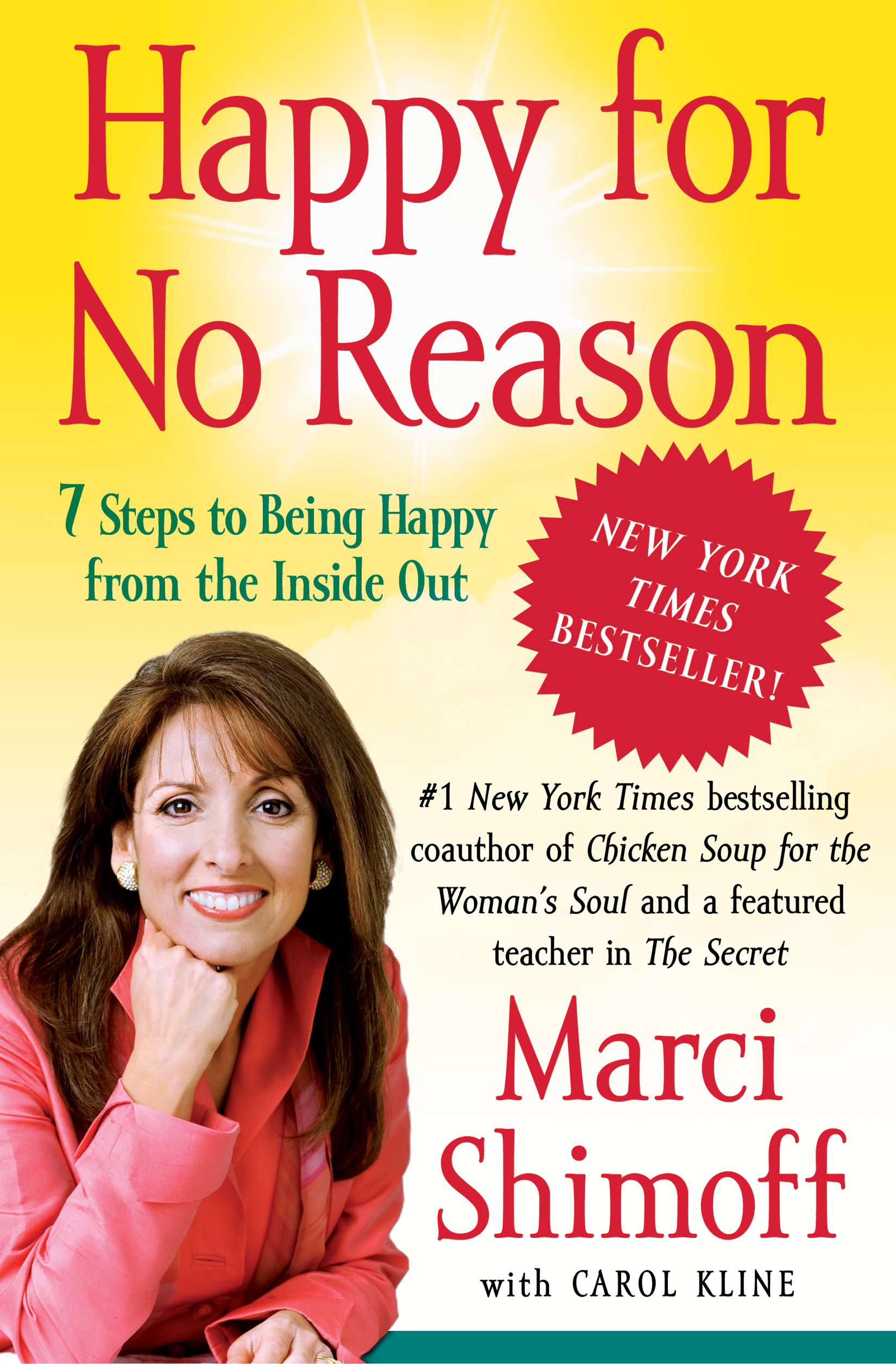

Product Details
Free Press, March 2009
Trade Paperback, 336 pages
ISBN-10: 1416547738
ISBN-13: 9781416547730
INTRODUCTION
Welcome to a Happier Life!
I was crammed in the back of an ancient flatbed truck with thirty other Westerners, bumping down a rock-strewn dirt road heading toward the foothills of the Himalayas. We each had a bandana covering our nose and mouth to keep us from choking on the dust. We were on our way to a small, remote mountain village where we would provide humanitarian support for the villagers' educational, medical, and housing needs. I was tired, grumpy, and sore all over. After six hours, the driver stopped the truck, got out, and unceremoniously hauled all our luggage onto the dusty ground.
"You'll need to walk the rest of the way," he said. "It's another mile, and from here on, the road is too steep and narrow for my truck." As the truck rattled off, I looked at my ninety-one-pound suitcase with dread. Why had I packed all that unnecessary stuff? Ridiculous. I tried dragging it a few yards up the rough, mountainous trail, but it was hopeless; I wasn't strong enough. Dusk was falling; what could I do? Everyone else in the group was wrestling with their own bags; no one could help me. But they were managing to make their way up the hill and soon were nearly out of sight. I sat down and spent a couple of minutes fighting down a rising panic. Were there tigers here?
Then a tiny, barefoot old woman, her face seamed with wrinkles, came out of the forest and up the road toward me. She approached me with a warm smile, picked up my bag, and, astonishingly, hoisted it up onto her head as though it weighed no more than a basket of fruit. Then she headed up the hill, motioning for me to follow.
As we ventured up the path together, though we had no language in common, I was struck by the twinkle in her eyes and the simple happiness that she exuded. When we finally reached the top of the mountain, I was met with the huge smiles and enthusiastic greetings of her fellow villagers.
I spent the next two weeks working side-by-side with these people, attending to the children, preparing food, and helping administer medical care. Like them, I slept on the ground, bathed in the river, and drank milk fresh from the cow. To my surprise, I found that this no-frills lifestyle agreed with me. I felt clear, peaceful, and full of energy.
During my stay, I also spent a lot of time observing my mountain hosts. Here were people who had no electricity or running water, living on the bare minimum with no creature comforts. Yet there was a lightness of spirit, a sense of humor, and an easy friendliness about them that was remarkable. They were simply happy from the inside out.
Of course, I realized that their happiness wasn't a product of their poverty. I'd seen plenty of dirt-poor men, women, and children in all corners of the world who were utterly miserable. I'd also met people with every shiny, expensive toy money could buy who were ecstatic about their good fortune, as well as fabulously wealthy folks who were living proof of the saying "Money can't buy happiness."
The experience reinforced my conviction that happiness isn't about having everything you've ever dreamed of, nor is it simply negating the need for material pleasures in life. It goes deeper than that. What we're all really looking for is happiness from within that doesn't depend on external circumstances -- the kind I call Happy for No Reason.
My time among the Himalayan villagers crystallized my goal: without giving up my regular life, I wanted to find a way to enjoy that kind of happiness, no matter where I was or what I was doing.
Chances are you picked up this book for the very same reason. If you're human, it comes with the package: everyone, everywhere, wants to be happy. You might already be pretty happy and just want to crank up the volume a notch or two. Or you may be seriously unhappy and wondering how others around you manage to find delight in their lives. Perhaps you've created your version of the American Dream, but still feel an emptiness inside that nothing on the outside seems to fill.
The good news is that it doesn't matter where you begin. Wherever you are right now, this book will show you how to be happier. You don't have to have happy genes, win the lottery, or become a saint. By the time you finish reading these pages, you will know how to experience an authentic state of sustained happiness for the rest of your life.
My Heart's Quest
This book was born of my own deep longing to be happy. The kind of happy that is solid, true, and anchored in my being, so that no matter what my external circumstances are, there is still a feeling of unshakable fulfillment, joy, and inner peace. Other people lived this way, so I knew it was possible. Yet for so many years, no matter what I did, it seemed to elude me.
As you'll read in my story in Chapter 1, I was unhappy from the get-go. As a young teen, I began a personal, and later professional, quest that lasted over thirty-five years and ultimately led me to the amazing findings in this book. During that time, I took every transformational seminar under the sun. For years I studied and taught success principles. I applied them in my own life and gained a good measure of success. I had plenty of reasons to be happy: I was a #1 New York Times best-selling author, I'd received national acclaim as an inspirational speaker, and I'd touched millions of people's lives. I was very familiar with what it meant to be "happy because..." The problem was it didn't bring me the happiness I wanted.
Looking around, I saw that the happiest people I knew weren't the most successful and famous. Some were married, some were single. Some had lots of money, and some didn't have a dime. Some of them even had health challenges. From where I stood, there seemed to be no rhyme or reason to what made people happy. The obvious question became Could a person actually be happy for no reason?
I had to find out.
The Study of Happiness
So I threw myself into the study of happiness. I interviewed scores of experts and delved into the research from the burgeoning field of positive psychology, the scientific study of the positive traits that enable people to enjoy meaningful, fulfilling, and happy lives. I soaked it up like a sponge and found a number of gems -- fascinating, amazing, and useful information that's changed my life and will change yours too.
My first major discovery was that scientists have found that we each have a "happiness set-point," the genetic and learned tendency to remain at a certain level of happiness, similar to a thermostat setting on a furnace. Fortunately for those of us not born on the sunny side of the street, it's been shown that we can change our happiness set-points. I'll discuss this more in the next chapter and offer you specific exercises throughout the book to raise your happiness set-point.
I also learned that two of our greatest barriers to happiness, fear and anxiety, have been hardwired in us for millennia to ensure our survival as a species. In today's world, however, that old wiring has become more harmful than helpful. In the coming chapters, you'll discover ways to disconnect that internal alarm system so you can lead a happier life.
Research findings like these thrilled me, but I still wanted more. In my years studying success, I'd found that success leaves clues. You can look at the lives of successful people to learn how to become successful yourself. I figured that the same must be true of happiness, so I set out to interview 100 truly happy people.
The Happy 100
It turned out that it wasn't that easy to find 100 truly happy people, even in a nation of 280 million! I'd read about the epidemic of unhappiness in our country: one out of every five women in America is on antidepressants, and 6 million men start taking antidepressants every year. But I was still shocked to experience it firsthand. I asked everyone I met, "Who's the happiest person you know?" People really had to stop and think. Then, inevitably, the first person they'd name would be someone who was fabulously successful. "But wait," they'd say, "he (or she) isn't really happy." Many people couldn't think of anyone they considered truly happy. But I persisted in my search, and eventually I found over 100 deeply happy people to interview. I call them the Happy 100. They're men and women of all ages and backgrounds, from all different walks of life. Their stories are amazing and revealing. They've opened my eyes to a whole new way of living.
In addition to conducting interviews, I posted a very simple survey on my website, a single question asking "What do you think is the most important thing necessary to experience the Happy for No Reason state?" The responses were illuminating.
I was right. Like success, happiness does leave clues. I came away from my interviews and survey with clear evidence that happy people live their lives differently from unhappy people. I discovered 21 habits that happy people share -- I call them the Happiness Habits -- that anyone can practice to easily and effectively support the experience of deep and lasting happiness.
Then I came upon my most important discovery, one that sets this book apart from all the rest: the concept of Happy for No Reason. Other experts on happiness urge you to find the things in life that make you happy, and do more of those things. There's nothing wrong with that, but it won't bring you true and lasting happiness. Happy for No Reason takes a radically different approach, showing you breakthrough methods to consistently experience the deep, inner happiness that's at your core -- a happiness that's beyond reasons and that's here to stay.
My research on happiness and my own experience have convinced me that becoming Happy for No Reason is entirely doable. Today we know so much more about everything in our world. We've used technology to explore many aspects of life, from our own bodies to the composition of the galaxy, and are finally using technology to explore happiness. In the past two decades, scientists in the field of positive psychology have made tremendous strides, identifying the happiness set-point, the neurotransmitters of happiness, and even where happiness is located in the brain. For the first time in history, we know that happiness isn't an abstract emotion; it's a physiological state that can be measured -- and experienced more often in our everyday lives.
My discoveries were so remarkable I wanted to share them with as many people as possible, so I decided to write this book. I called my dear friend of over twenty-five years, Carol Kline, a writer who shared my enthusiasm for this topic, and I asked her to join me. Carol had seen me through everything, so she was the perfect person to embark on this journey with me. We both feel blessed by the thousands of hours spent researching and talking with experts and hearing the stories of happy people. And the result, Happy for No Reason, is a combination of the best knowledge and current research on happiness, practical methods gleaned from the happy people I interviewed, and the inspirational stories of their lives.
What You'll Find in This Book
Happy for No Reason is divided into three sections. In this first section, Part I, we'll continue to explore the paradigm of true happiness I call Happy for No Reason. Just understanding this idea can change the way you experience happiness in your own life. You'll find a Happy for No Reason questionnaire that will help you assess and understand your own present level of happiness. You'll also learn three guiding principles that will help you get past the common blocks to happiness in your life and speed your progress. Finally, I'll share with you how I've applied the Law of Attraction to being happier. I'm honored to be featured in the worldwide film phenomenon The Secret, which focuses on this law. I've seen how powerfully it can change lives.
Part II is the how-to section that shows you step-by-step how to raise your level of happiness. Through my research, I discovered that there are seven specific steps for becoming Happy for No Reason. I wanted to make these seven steps easy to remember, and because people's homes are so often a metaphor for their lives, I decided to present them in a simple, easy-to-remember analogy: building a Home for Happiness. The seven steps of building your Home for Happiness correspond to the seven main areas of your life: personal power, mind, heart, body, soul, purpose, and people.
This holistic approach is vital. Many books on happiness just focus on the mind, but if you don't also address your habitual behavior in the other areas of your life, you won't experience true happiness. Here's an overview of the steps (one per chapter):
1. The Foundation -- Take Ownership of Your Happiness
2. The Pillar of the Mind -- Don't Believe Everything You Think
3. The Pillar of the Heart -- Let Love Lead
4. The Pillar of the Body -- Make Your Cells Happy
5. The Pillar of the Soul -- Plug Yourself In to Spirit
6. The Roof -- Live a Life Inspired by Purpose
7. The Garden -- Cultivate Nourishing Relationships
Each step has three Happiness Habits, with corresponding exercises based on the latest research and findings on how to raise your happiness set-point, as well as inspirational stories.
As a Chicken Soup for the Soul coauthor, I'd been deeply moved reading over 20,000 stories that had been submitted for my books. When the books were published, the overwhelming response from millions of readers confirmed for me that stories open people's hearts and affect them deeply. That's why I decided to include some of the inspiring first-person stories of transformation from the Happy 100 in this book. From my 100 interviews with these unconditionally happy people, I've selected twenty-one stories that clearly define what it means to be Happy for No Reason.
You'll read phenomenal tales from a variety of people, including a former drug dealer turned minister, a hit filmmaker, a political refugee, and a famous actress who escaped a "family curse," as well as stories from doctors, nurses, mothers, teachers, and business executives. You'll meet Zainab, who lived under Saddam Hussein's thumb and locked up her memories -- and her happiness -- in a box hidden deep inside. And Janet, who was living a ho-hum life and working at a dead-end job, until she discovered a simple yet profound way to be deeply happy every day. You'll hear Gay's story of losing 100 pounds, and gaining the life of his dreams, after finding the key to really nourishing himself. These stories are wonderful illustrations that there are many paths to Happy for No Reason, and that we're all capable of arriving at that destination no matter where we begin the journey.
Part III is about being Happy for No Reason -- permanently. No more waiting for the other shoe to drop, wondering how long your happiness will last. In this section, you'll get clear direction about how to put the Happiness Habits into practice every day and find resources that can help you sustain being Happy for No Reason for the rest of your life.
Becoming Happy for No Reason may not happen overnight -- though, as I found in some instances, it can! Having the vision that it exists and knowing the steps to achieve it will put you on the fast track to a complete transformation of your life. I know, because it's happened to me and to thousands of others. I've used the tools and techniques presented in this book myself and with my clients. Though I wasn't happy for many years, I've been able to move from a D+ to an A- on the happiness scale. Now, when life tosses my boat around, I return to an even keel more easily; I don't capsize anymore. I'm still on the journey, still a student as well as a teacher, but I am living proof that these steps can move you immediately in the right direction, no matter where you start. Believe me, if I can do it, so can you.
It is my deep prayer and wish that this book lead you to build a home for happiness inside yourself that is unshakable -- and from that strong and peaceful place you create more happiness in the world.
Happy for No Reason...
Really?
Happiness is the meaning and the purpose of life, the whole aim and end of human existence.
-- Aristotle
Years ago, I taught a success seminar in which I asked the participants to each take a big sheet of heavy paper and write across the top "100 THINGS TO BE, DO, HAVE." Then they made three long columns and began listing their dreams, big and small. When they shared their goals afterward, they were invariably all fired up: people wanted to go scuba diving in the Great Barrier Reef, own a Mercedes SL600 Roadster (cream white, with titanium silver alloy wheels), dance at the White House, fly a small plane around the world. They wanted to rise to the top of their field, end world hunger, create world peace, be on the cover of Time magazine.
Somewhere on the BE list a few people wrote "Be happy," but I was surprised at how often most people overlooked that. That's what the whole page was about, wasn't it? Didn't being, doing, and having all these things equal happiness?
Over time, I've come to look back on those lists as a great example of taking the long way around. Big and wonderful as those things are, they aren't the ultimate thing we all want. If you cut to the chase, what we really want is to be happy.
The truth is that happiness is so compelling, so attractive -- so irresistible -- that whether you realize it or not, everything you do is aimed at making yourself happy. Happiness has been called the holy grail of human existence, the be-all and end-all of life. Aristotle called it the goal of all goals.
Studies around the world show that when people are asked to rank what they want from life, they put the desire to be happy at the top of the list, more important than wealth, status, a good job, fame, and sex. This is true for people of all cultures, races, religions, ages, and lifestyles. And research also shows how vital happiness is: happy people live longer, are healthier, and have better relationships. In fact, happiness leads to more success in every area of your life.
Unfortunately, many people are not experiencing much sustained, authentic happiness. Consider these sad statistics:
Less than 30 percent of people report being deeply happy.
Twenty-five percent of Americans and 27 percent of Europeans claim they are depressed.
The World Health Organization predicts that by 2020, depression will be second only to heart disease in terms of the global burden of illness.
Although our lifestyles are better than ever, we're unhappier than ever. It seems the more gadgets and goods we gather, the worse we feel.
In this book, I'm not going to show you directly how to make more money, be more successful, or have better relationships. I leave that to my friends and colleagues in the transformational world who do that all so well. What I am going to do is tell you what I would most want to know. This book answers the question I've spent the past thirty-five years studying and researching, the one that is most important to me -- and that I believe is also most important to you: How can I be truly happy?
Although this question absorbed me for most of my life, for years I didn't have much luck answering it. In fact, I spent most of that time barking up the wrong tree.
One Unhappy Camper
I had imagined it all as a child: I would grow up, live in a beautiful house, have a wonderful husband and a great career. My body would be perfect and my social life fun and exciting. I would be HAPPY!
To live that life of my dreams, I knew I'd have to work hard to get all my ducks in a row. And although I was clear about what I wanted, I wasn't sure how I'd get it. The only thing I knew for sure was that I wasn't happy. I came out of the womb filled with existential angst. I was the brooding five-year-old who was worrying about the condition of the world while everyone else was watching Romper Room. At age seven, I was grilling my wonderful, loving parents about God and spirituality and becoming frustrated that they couldn't answer my questions. When I look through family albums, I see my brother and sister beaming at the camera while I always look as though I've just lost my best friend.
Even though I wasn't a naturally happy person, something deep within me knew that I didn't have to accept that way of being. It was as if I had some kind of antenna tuned to whatever I needed to learn most. When I was eleven, I slathered myself in suntan oil and snuck into my sister's room to steal a book to read while sunbathing. I grabbed the skinniest one, since I'd always been a slow reader, and headed outside. By the time I was halfway through the book, Hermann Hesse's Siddhartha, the story of a young Indian man on a quest for enlightenment thousands of years ago, I was in tears. I recognized that I wasn't alone; someone else on the planet understood my search and shared my longing for connection and joy. That book put me on the path of seeking.
While other girls were perfecting their stag leap for cheerleading tryouts, I was taking self-development courses. When I was thirteen, I heard my first motivational speaker, Zig Ziglar. As I watched him walk back and forth across the stage, revealing the secrets of success and telling stories that gave me goose-bumps, lightning struck. I realized that being a professional speaker was what I wanted to do. It was a strange career goal for a young teenage girl in the early 1970s. Even so, I pictured myself speaking in front of large audiences all over the world, inspiring people to change their lives for the better. My parents were supportive, even though my father was a dentist and they really wanted me to be a dental hygienist. Mom said, "You sure talk enough, so you might as well get paid for it."
I moved my Nancy Drew mysteries to the side to make room for every humanistic psychology book I could lay my hands on. I devoured them. At the age of sixteen, I began meditating every day, and by the time I turned twenty, I was a teacher of meditation. Though meditating had a profound impact on my life, I was still searching.
As time passed, I never lost sight of my goal of becoming a speaker. I immersed myself in success principles and did my best to put every one into practice. I tithed a percentage of my income and visualized my goals. I made vision boards to help me picture those goals and discovered I had a gift for manifesting my desires. For example, after earning my MBA, I drew to myself a wonderful job that included many qualities I had always yearned for in a career. As vice president of marketing for a company that sold Austrian crystal, I was responsible for training and inspiring employees. I loved it! I taught them everything I'd studied in my own life: the principles of the Law of Attraction, being clear about what you want, and knowing how to harness your intuition, overcome obstacles, and achieve your goals.
From there, I moved on to teaching those same principles of success as a corporate trainer for Fortune 500 companies and then for a national seminar company speaking to large audiences of women all over the country. With every new position came a bigger paycheck and more kudos. But I wasn't exactly happy. I knew there was something still missing. I just couldn't tell you what it was.
Maybe it was my subject matter, I decided. So instead of teaching success seminars, I began to teach self-esteem seminars for women. Jack Canfield, the nation's top expert on self-esteem, became my amazing mentor -- years before he created the mega-best-selling book series Chicken Soup for the Soul -- and soon I was giving keynotes to two or three hundred women a day on self-esteem. I taught on my high heels from 7:00 in the morning until late afternoon, then jumped in a car and drove three hours to the next city, day after day after day. It was exhausting but exhilarating. I loved standing in front of my audiences and watching their faces light up. Yet I still felt it wasn't quite enough -- I wanted to reach more people.
Then came my big break. It began with a decision to take care of myself. Burned out from all my traveling, I signed up for a seven-day silence retreat, a real challenge for a Chatty Cathy like me. On the fourth day, in the middle of meditation, the proverbial lightbulb clicked on. I flashed on a title: Chicken Soup for the Woman's Soul. Up to this point, only the original Chicken Soup book had been published, and I knew this idea was a colossal winner. I was so excited; I'd just had the epiphany of my career. The only problem was I had to stay silent for three more days! The minute the retreat ended, I ran to the nearest payphone and called Jack. A year and a half later, Chicken Soup for the Woman's Soul became a #1 New York Times best-seller and I went on to write five more Chicken Soup for the Soul books that have sold over 13 million copies.
There I was, on national TV and radio shows, giving speeches to huge audiences, being treated like a queen and living the whirlwind life of success. At one conference, I was picked up in a white stretch limo to speak to a crowd of 8,000. Throughout the three-day event, thousands of women stood in a line that stretched around the entire convention center waiting for me to sign their books. A massage therapist rubbed my hands every hour as I autographed copy after copy after copy -- so many they had to be airlifted from every corner of the country to meet the demand. Many women in the autograph line told me my books had changed, or even saved, their lives. I was deeply moved by their stories and felt good that I had done something that made a difference. But when I went to my hotel room each night, I flopped on the bed, feeling drained and strangely flat.
You'd think I'd have been on top of the world. But I wasn't. Sure, my ego had gotten a boost, but I still had the same worries, tensions, complaints, and bad hair days as everyone else. At each step of the way, I was excited about the successes I'd achieved, but I noticed that the high never lasted. I was happy about the things in my life, but not really happy.
Yes, I know how this sounds. Cry me a river, you're thinking. Well, I too have sat through many an E! True Hollywood Story and rolled my eyes over the sad story of the celeb whose rise to fame and fortune brought only tears. Oh please, I'd tell myself, if I were in their shoes, I'd be so happy you'd have to tie me down so I wouldn't float away. But now I was having a taste of that life, and the deep happiness I craved just wasn't happening. I was meeting famous people and seeing that many of them weren't happy either.
Maybe the problem wasn't my career, but my love life. If I just found the right partner, I told myself, then I'd be happy. I approached this challenge with the same single-mindedness I'd given to pursuing success. I dated enthusiastically and had a few relationships that were close but not it. Then, one weekend, I attended a seminar at a large retreat center in upstate New York. There, in the gravel parking lot, we were introduced by friends -- and before we'd even said hello, he took me in his arms and waltzed me around, sweeping me off my feet with his European flair. Sergio, my Italian Prince Charming, had arrived. Like most romances, it had its ups and downs, but eventually we settled down together, bought a lovely house, and moved in.
Finally, I had the life I'd imagined: the house, the man, the career, and a great social life. (Okay, so I didn't have Halle Berry's body -- but four out of five isn't bad.) Still, I couldn't shoo away the thoughts of dissatisfaction that kept popping up in my head or escape the gnawing pain I felt in my heart.
I realized I had a big problem. I couldn't continue to acquire or accomplish any more thinking that would make me happy. My life until that point had proven the futility of that approach. I'd come to the end of the line. Something had to change.
I had to admit the awful truth to myself: I still felt empty. I had every reason to be happy and yet I wasn't.
Although it seems obvious in hindsight, I had believed for so long that happiness would come from what I owned, achieved, or experienced that it took me a while to finally get it. Maybe happiness didn't come from the reasons I had imagined. Maybe happiness didn't come from any reason at all.
That's when I shifted my focus to the idea of Happy for No Reason and started applying the principles I discovered through my research and interviews. As a result, my own happiness level took a quantum leap. I felt a greater sense of peace and well-being that came from deep inside. I found myself singing throughout the day and appreciating the people around me more. I knew I'd made real progress when about five years ago my friends started calling me the "joy bunny." I was as thrilled as if I had won the Nobel Prize.
Of my findings, one piece of information stood out. It completely transformed my approach to being happy and explained why, for so many years, true happiness had always been just outside my grasp.
Why Some People Are Happier Than Others
If you and I were sitting over some tea at a sidewalk café and I asked you, "Are you happy?," what would your answer be?
A few of you might say, "Absolutely -- if I were any happier, I'd be twins!" (Okay, that would be a very few of you.)
A lot of you would probably reply, "Sometimes."
But I'd bet dollars to doughnuts that at least half of you would say, "No, not really."
Some people enjoy their lives no matter what happens, while others can't find happiness no matter how hard they try. Most of us fall somewhere in between.
The reason for this puzzling disparity is the happiness set-point I mentioned in the introduction. Researchers have found that no matter what happens to you in life, you tend to return to a fixed range of happiness. Like your weight set-point, which keeps the scale hovering around the same number, your happiness set-point will remain the same unless you make a concerted effort to change it.
In fact, there was a famous study conducted that tracked people who'd won the lottery -- what many people think of as the ticket to the magic kingdom of joy. Within a year, these lucky winners returned to approximately the same level of happiness they'd experienced before their windfall. Surprisingly, the same was true for people who became paraplegic. Within a year or so of being disabled, they also returned to their original happiness level.
Whatever the experience -- positive or negative -- people return to their happiness set-point. Further research has shown only three exceptions to this phenomenon: losing a spouse, which can take more time to recover from; chronic unemployment; and extreme poverty.
Okay, you may be thinking, if my happiness level is set -- how did it get there? Dr. David Lykken, a scientist at the University of Minnesota, had the same question. To determine how much of a person's happiness comes from nature and how much from nurture, Lykken and his team, in the late 1980s, began studying thousands of sets of twins, including a number of identical twins who had been raised apart. After extensive testing they found that approximately 50 percent of our happiness set-point is genetic and the other 50 percent is learned. Half of the reason you walk around generally cheery or perennially dreary is that you were born that way, the other half is determined by your thoughts, feelings, and beliefs formed in response to your life experiences.
In a recent review of the literature and studies on happiness, positive psychology researchers Sonja Lyubomirsky, Kennon Sheldon, and David Schaade confirmed Lykken's earlier findings that 50 percent of our happiness comes from our genetics. But more exciting was the new information they uncovered about the remaining 50 percent. It appears that only 10 percent of our happiness set-point is determined by circumstances such as our level of wealth, marital status, and job. The other 40 percent is determined by our habitual thoughts, feelings, words, and actions. This is why it's possible to raise your happiness set-point. In the same way you'd crank up the thermostat to get comfortable on a chilly day, you actually have the power to reprogram your happiness set-point to a higher level of peace and well-being.
The discovery of the happiness set-point and our ability to change it turns everything we've all believed about being happy upside down. We spend our entire lives searching for happiness, yearning for it, trying to get the things we are sure will make us happy: wealth, beauty, relationships, career, and so on. But the truth is, to be truly happy, all you have to do is raise your happiness set-point.
I sure wish I'd known I was just one of those people who had a low happiness set-point before spending so much time and energy chasing after reasons to be happy. From my interviews with the Happy 100, I've come to see that genuinely happy people are Happy for No Reason.
Let's look at this phenomenon.
The Happiness Continuum
Happiness for any reason is just another form of misery.
-- The Upanishads
One day, as I sat down to compile my findings, all the pieces of the puzzle fell into place. I had a simple, but profound "a-ha" -- there's a continuum of happiness:
Unhappy: We all know what this means: Life is a bummer. Some of the signs are anxiety, fatigue, feeling blue or low -- your garden-variety unhappiness. This isn't the same as clinical depression, which is characterized by deep despair and hopelessness that dramatically interferes with your ability to live a normal life, and for which professional help is absolutely necessary.
Happy for Bad Reason: When people are unhappy, they often try to make themselves feel better by indulging in addictions or behaviors that may feel good in the moment but are ultimately detrimental. They seek the highs that come from drugs, alcohol, excessive sex, "retail therapy," compulsive gambling, overeating, and too much television watching, to name a few. This kind of happiness is hardly happiness at all. It is only a temporary way to numb or escape our unhappiness through fleeting experiences of pleasure.
Happy for Good Reason: This is what people usually mean by happiness: having good relationships with our family and friends, success in our career, financial security, a nice house or car, or using our talents and strengths well. It's the pleasure we derive from having the healthy things in our lives that we want.
Don't get me wrong. I'm all for this kind of happiness! It's just that it's only half the story. Being Happy for Good Reason depends on the external conditions of our lives. If these conditions change or are lost, our happiness usually goes too.
Deep inside, you know that life isn't meant to be about getting by, numbing your pain, or having everything "under control." True happiness doesn't come from merely collecting an assortment of happy experiences. At your core, you know there's something more than this.
You're right. There is one more level on the happiness continuum: Happy for No Reason.
Happy for No Reason: This is true happiness -- a neurophysiological state of peace and well-being that isn't dependent on external circumstances.
Happy for No Reason isn't elation, euphoria, mood spikes, or peak experiences that don't last. It doesn't mean grinning like a fool 24/7 or experiencing a superficial high. Happy for No Reason isn't an emotion. In fact, when you are Happy for No Reason, you can have any emotion -- including sadness, fear, anger, or hurt -- but you still experience that underlying state of peace and well-being.
When you're Happy for No Reason, you bring happiness to your outer experiences rather than trying to extract happiness from them. You don't need to manipulate the world around you to try to make yourself happy. You live from happiness, rather than for happiness.
This is a revolutionary concept. Most of us focus on being Happy for Good Reason, stringing together as many happy experiences as we can, like beads in a necklace, to create a happy life. We have to spend a lot of time and energy trying to find just the right beads so we can have a "happy necklace."
Being Happy for No Reason, in our necklace analogy, is like having a happy string. No matter what beads we put on our necklace -- good, bad, or indifferent -- our inner experience, which is the string that runs through them all, is happy, creating a happy life.
When you're Happy for No Reason you're unconditionally happy. It's not that your life always looks perfect -- it's just that however it looks, you'll still be happy.
As the thirteenth-century poet Rumi described it, "Happy, not from anything that happens. Warm, not from fire or a hot bath. Light, I register zero on a scale." Whenever I asked the Happy 100 to describe the qualities of being Happy for No Reason, I got the same answers over and over:
Having a sense of lightness or buoyancy
Feeling alive, vital, energetic
Having a sense of flow, openness
Feeling love and compassion for yourself and others
Having passion about your life and purpose
Feeling gratitude, forgiveness
Being at peace with life
Being fully present in the moment
Matthieu Ricard, a French scientist who became a Buddhist monk over thirty years ago, is often called "the happiest man in the world" by researchers who've measured his brain's functioning both in and out of meditation. (More about monks in the laboratory in Chapter 7.) Ricard's book, Happiness: A Guide to Developing Life's Most Important Skill, gives one of the clearest descriptions of Happy for No Reason I've ever heard. He writes, "By happiness I mean a deep sense of flourishing that arises from an exceptionally healthy mind. This is not a mere pleasurable feeling, a fleeting emotion, or a mood, but an optimal state of being."
How Happy for No Reason Are You?
The following Happy for No Reason questionnaire will give you a snap-shot of how Happy for No Reason you are in your life right now. Though you may have filled out happiness questionnaires before, you may not have noticed that they're usually state-dependent; that is, they ask you to rate your happiness according to what's going on in your life (job, career, relationships, and so on) and how satisfied you are with your life circumstances. Those questionnaires measure Happy for Good Reason. This questionnaire is different; it measures Happy for No Reason.
The Happy for No Reason questionnaire is modeled after the Well-Being Scale that is part of the Multidimensional Personality Questionnaire, a tool developed by Auke Tellegen, a professor of psychology at the University of Minnesota, to help researchers determine happiness set-points. As you answer these questions, think about how they apply to you in general.
The Happy for No Reason Questionnaire
Rate each statement on a scale of 1 to 5:
1 = Not at all true
2= Slightly true
3 = Moderately true
4 = Mostly true
5 = Absolutely true
1. I often feel happy and satisfied for no particular reason.
2. I live in the moment.
3. I feel alive, vital, and energetic.
4. I experience a deep sense of inner peace and well-being.
5. Life is a great adventure for me.
6. I don't let bad situations keep me down.
7. I am enthusiastic about the things I do.
8. Most days I have an experience of laughter or joy.
9. I trust that this is a friendly universe.
10. I look for the gift or the lesson in everything that happens.
11. I am able to let go and forgive.
12. I feel love for myself.
13. I look for the good in every person.
14. I change the things I can and accept the things I can't change.
15. I surround myself with people who support me.
16. I don't blame others or complain.
17. My negative thoughts don't overshadow me.
18. I feel a general sense of gratitude.
19. I feel connected to something bigger than myself.
20. I feel inspired by a sense of purpose in my life.
Scoring section:
If your score is 80-100: To a great degree, you are Happy for No Reason.
If your score is 60-79: You have a good measure of being Happy for No Reason.
If your score is 40-59: You have glimpses of being Happy for No Reason.
If your score is under 40: You have little experience of being Happy for No Reason.
Whatever your score, you can always move toward being more Happy for No Reason. As I said earlier, it doesn't matter where you begin; what matters is that you do begin. Once you've finished reading the book and have begun practicing the seven steps and the Happiness Habits, take the questionnaire again. After that, assessing your Happy for No Reason score on a regular basis will help you chart your progress.
Happy for No Reason: Your Natural State
Happy for No Reason isn't just a nice idea. As I'll explain in later chapters, it's a specific, measurable physiological state characterized by distinct brain activity, heart rhythms, and body chemistry.
Scientists tell us that every subjective experience we have has a corresponding state of functioning in our bodies. People who are Happy for No Reason tend to have greater activity in the left prefrontal cortex, orderly heart wave patterns, and more of the specific neurotransmitters associated with well-being and happiness: oxytocin, serotonin, dopamine, and endorphins.
Although modern science gives us new insight into the physiology of Happy for No Reason, it's a state that's been spoken of in virtually all spiritual and religious traditions throughout history. The concept is universal. In Buddhism, it is called causeless joy, in Christianity, the kingdom of Heaven within, and in Judaism it is called ashrei, an inner sense of holiness and health. In Islam it is called falah, happiness and wellbeing, and in Hinduism it is called ananda, or pure bliss. Some traditions refer to it as an enlightened or awakened state.
I've noticed the widespread recognition of this concept around the world. No matter where I go, when people hear the expression Happy for No Reason, it strikes a deep chord in them. We seem to know intuitively that our innermost essence is happiness. You don't have to create it; it's who you are. The rest of this book is devoted to showing you how to get back to that natural state.