
Plus, receive recommendations and exclusive offers on all of your favorite books and authors from Simon & Schuster.
0:00 /
Table of Contents
About The Book
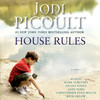
From the #1 New York Times bestselling author of Small Great Things and the modern classics My Sister’s Keeper, The Storyteller, and more, comes a “complex, compassionate, and smart” (The Washington Post) novel about a family torn apart by a murder accusation.
When your son can’t look you in the eye…does that mean he’s guilty?
Jacob Hunt is a teen with Asperger’s syndrome. He’s hopeless at reading social cues or expressing himself well to others, though he is brilliant in many ways. He has a special focus on one subject—forensic analysis. A police scanner in his room clues him in to crime scenes, and he’s always showing up and telling the cops what to do. And he’s usually right.
But when Jacob’s small hometown is rocked by a terrible murder, law enforcement comes to him. Jacob’s behaviors are hallmark Asperger’s, but they look a lot like guilt to the local police. Suddenly the Hunt family, who only want to fit in, are thrust directly in the spotlight. For Jacob’s mother, it’s a brutal reminder of the intolerance and misunderstanding that always threaten her family. For his brother, it’s another indication why nothing is normal because of Jacob.
And for the frightened small town, the soul-searing question looms: Did Jacob commit murder?
House Rules is “a provocative story in which [Picoult] explores the pain of trying to comprehend the people we love—and reminds us that the truth often travels in disguise” (People).
When your son can’t look you in the eye…does that mean he’s guilty?
Jacob Hunt is a teen with Asperger’s syndrome. He’s hopeless at reading social cues or expressing himself well to others, though he is brilliant in many ways. He has a special focus on one subject—forensic analysis. A police scanner in his room clues him in to crime scenes, and he’s always showing up and telling the cops what to do. And he’s usually right.
But when Jacob’s small hometown is rocked by a terrible murder, law enforcement comes to him. Jacob’s behaviors are hallmark Asperger’s, but they look a lot like guilt to the local police. Suddenly the Hunt family, who only want to fit in, are thrust directly in the spotlight. For Jacob’s mother, it’s a brutal reminder of the intolerance and misunderstanding that always threaten her family. For his brother, it’s another indication why nothing is normal because of Jacob.
And for the frightened small town, the soul-searing question looms: Did Jacob commit murder?
House Rules is “a provocative story in which [Picoult] explores the pain of trying to comprehend the people we love—and reminds us that the truth often travels in disguise” (People).
Excerpt
House Rules Theo
I’ve had to get twenty-four stitches on my face, thanks to my brother. Ten of them left a scar cutting through my left eyebrow, after the time that Jacob knocked over my high chair when I was eight months old. The other fourteen stitches were on my chin, Christmas 2003, when I got so excited about some stupid gift that I crumpled the wrapping paper, and Jacob went ballistic at the sound. The reason I’m telling you this has nothing to do with my brother, though. It’s because my mother will tell you Jacob’s not violent, but I am living proof that she’s kidding herself.
I am supposed to make exceptions for Jacob; it’s one of our unwritten house rules. So when we need to take a detour away from a detour sign (how ironic is that?) since it’s orange and freaks Jacob out, that trumps the fact that I’m ten minutes late for school. And he always gets the shower first, because a hundred billion years ago when I was still a baby Jacob took the first shower, and he can’t handle having his routine messed up. And when I turned fifteen and made an appointment to get my learner’s permit at the DMV—an appointment that got canceled when Jacob had a meltdown over buying a pair of new sneakers—I was expected to understand that these things happen. The problem is, something happened the next three times I tried to get my mom to take me to the DMV and, finally, I just stopped asking. At this rate, I’ll be riding my skateboard till I’m thirty.
Once, when Jacob and I were little, we were playing in a pond near our house with an inflatable boat. It was my job to watch Jacob, even though he was three years older than I am and has had just as many swimming lessons as I have. We overturned the boat and swam up underneath it, where the air was heavy and wet. Jacob started talking about dinosaurs, which he was into at the time, and he wouldn’t shut up. Suddenly I began to panic. He was sucking up all the oxygen in that tiny space. I pushed at the boat, trying to lift it off us, but the plastic had created some kind of seal on the surface of the water—which only made me panic even more. And sure, with twenty-twenty hindsight, I know I could have swum out from underneath the boat, but at that moment it didn’t occur to me. All I knew, at the time, was that I couldn’t breathe. When people ask me what it’s like growing up with a brother who has Asperger’s, that’s what I always think of, even though the answer I give out loud is that I’ve never known anything different.
I’m no saint. There are times I’ll do things to drive Jacob crazy, because it’s just so damn easy. Like when I went into his closet and mixed up all his clothes. Or when I hid the toothpaste cap so that he couldn’t put it back on when he was done brushing his teeth. But then I wind up feeling bad for my mom, who usually bears the brunt of one of Jacob’s meltdowns. There are times I hear her crying, when she thinks Jacob and I are asleep. That’s when I remember that she didn’t sign up for this kind of life, either.
So I run interference. I’m the one who physically drags Jacob away from a conversation when he’s starting to freak people out by being too intense. I’m the one who tells him to stop flapping when he’s nervous on the bus, because it makes him look like a total nutcase. I’m the one who goes to his classes before I go to my own, just to let the teachers know that Jacob had a rough morning because we unexpectedly ran out of soy milk. In other words, I act like the big brother, even though I’m not. And during the times when I think it’s not fair, when my blood feels like lava, I step away. If my room isn’t far enough, I get on my skateboard and tool somewhere—anywhere that isn’t the place I am supposed to call home.
That’s what I do this afternoon, after my brother decides to cast me as the perp in his fake crime scene. I’ll be honest with you—it wasn’t the fact that he took my sneakers without asking or even that he stole hair out of my brush (which is, frankly, Silence of the Lambs creepy). It was that when I saw Jacob in the kitchen with his corn-syrup blood and his fake head injury and all the evidence pointing to me, for a half a second, I thought: I wish.
But I’m not allowed to say my life would be easier without Jacob around. I’m not even allowed to think it. It’s another one of those unwritten house rules. So I grab my coat and head south, although it is twenty degrees outside and the wind feels like knives on my face. I stop briefly at the skateboarding park, the only place in this stupid town where the cops even let you skate anymore, although it’s totally useless during the winter, which is like nine months of the year in Townsend, Vermont.
It snowed last night, about two inches, but there’s a guy with a snowskate trying to Ollie off the stairs when I get there. His friend is holding a cell phone, recording the trick. I recognize them from school, but they’re not in my classes. I’m sort of the antiskater personality. I take AP everything, and I have a 3.98 average. Of course, that makes me a freak to the skating crowd, just like the way I dress and the fact that I like to skate make me a freak to the honors crowd.
The kid who’s skating falls down on his ass. “I’m putting that on YouTube, bro,” his friend says.
I bypass the skate park and head through town, to this one street that curls like a snail. In the very center is a gingerbread house—I guess you call them Victorians. It’s painted purple and there’s a turret on one side. I think that’s what made me stop the first time—I mean, who the hell has a turret on their house, besides Rapunzel? But the person who lives in that turret is a girl who’s probably ten or eleven, and she has a brother who’s about half her age. Their mom drives a green Toyota van, and their dad must be some kind of doctor, because twice now I’ve seen him come home from work wearing scrubs.
I’ve been going there a lot, lately. Usually I crouch down in front of the bay window that looks into the living room. I can see pretty much everything from there—the dining room table, where the kids do their homework. The kitchen, where the mom cooks dinner. Sometimes she opens the window a crack and I can almost taste what they’re eating.
This afternoon, though, nobody is home. That makes me feel cocky. Even though it’s broad daylight, even though there are cars going up and down the street, I walk behind the house and sit down on the swing set. I twist the chains around and then let them untangle, even though I am way too old for this kind of stuff. Then I walk up to the back porch and try the door.
It opens.
It’s wrong, I know that. But all the same, I go inside.
I take off my shoes because it’s the polite thing to do. I leave them on a mat in the mudroom and walk into the kitchen. There are cereal bowls in the sink. I open the fridge and look at the stacked Tupperware. There’s leftover lasagna.
I take out a jar of peanut butter and sniff inside. Is it just my imagination, or does it smell better than the Jif we have at our house?
I stick my finger in and take a taste. Then, with my heart pounding, I carry the jar to the counter—plus another jar of Smucker’s. I take two slices of bread from the loaf on the counter and rummage in the drawers till I find the silverware. I make myself a PB&J sandwich as if it’s something I do in this kitchen all the time.
In the dining room, I sit down in the chair that the girl always sits in for meals. I eat my sandwich and picture my mother coming out of the kitchen, carrying a big roast turkey on a platter. “Hey, Dad,” I say out loud to the empty seat on my left, pretending that I have a real father instead of just a guilty sperm donor who sends a check every month.
How’s school? he would ask.
“I got a hundred on my bio test.”
That’s incredible. Wouldn’t be surprised if you wind up in med school, like I did.
I shake my head, clearing it. Either I’ve imagined myself into a TV sitcom or I have some kind of Goldilocks complex.
Jacob used to read to me at night. Well, not really. He read to himself, and he wasn’t reading as much as he was reciting what he’d memorized, and I just happened to be in the same general geographic location, so I couldn’t help but listen. I liked it, though. When Jacob talks, his voice rolls up and down as if every sentence is a song, which sounds really strange in normal conversation but somehow works when it’s a fairy tale. I remember hearing the story about Goldilocks and the Three Bears and thinking she was such a loser. If she’d played her cards right, she might have been able to stay.
Last year, when I was a freshman at the regional high school, I got to start over. There were kids from other towns who knew nothing about me. I hung out the first week with these two guys, Chad and Andrew. They were in my Methods class and seemed pretty cool, plus they lived in Swanzey instead of Townsend and had never met my brother. We laughed about the way our science teacher’s pants were hemmed two inches too short and sat together in the caf at lunch. We even made plans to check out a movie if a good one was playing on the weekend. But then Jacob showed up in the caf one day because he’d finished his physics packet in some freakishly short amount of time and his teacher had dismissed him, and of course he made a beeline for me. I introduced him and said he was an upperclassman. Well, that was my first mistake—Chad and Andrew were so psyched at the thought of hanging out with an upperclassman that they started asking Jacob questions, like what grade he was in and if he was on a sports team. “Eleventh,” Jacob said, and then he told them he didn’t really like sports. “I like forensics,” he said. “Have you ever heard of Dr. Henry Lee?” He then yapped for ten straight minutes about the Connecticut pathologist who’d worked on major cases like O. J. Simpson and Scott Peterson and Elizabeth Smart. I think he lost Chad and Andrew somewhere around the tutorial on blood spatter patterns. Needless to say, the next day when we picked lab partners in Methods, they ditched me fast.
I’ve finished my sandwich, so I get up from the dining room table and head upstairs. The first room at the top is the boy’s, and there are dinosaur posters all over the walls. The sheets are covered with fluorescent pterodactyls, and a remote-control T. rex lies on its side on the floor. For a moment, I stop dead. There was a time when Jacob was as crazy about dinosaurs as he is now about forensic science. Could this little boy tell you about the therizinosaurid found in Utah, with fifteen-inch claws that look like something out of a teen slasher flick? Or that the first nearly complete dinosaur skeleton—a hadrosaur—was found in 1858 in New Jersey?
No, he’s just a kid—not a kid with Asperger’s. I can tell, just by looking into the windows at night and watching the family. I know, because that kitchen with its warm yellow walls is a place I want to be, not somewhere I’d run away from.
I suddenly remember something. That day when Jacob and I were playing in the pond underneath the inflatable boat, when I started to freak out because I couldn’t breathe and the boat was stuck on top of us? He somehow broke the suction-cup seal of the boat on the surface of the water and wrapped his arms around my chest, holding me up high so that I could swallow huge gulps of air. He dragged me to the shore, and he sat beside me shivering until I could figure out how to speak again. It’s the last time I remember Jacob watching out for me, instead of the other way around.
In the bedroom where I’m standing, there’s a whole wall of shelves filled with electronic games. Wii and Xbox, mostly, with a few Nintendo DS tossed in for good measure. We don’t have any gaming systems; we can’t afford them. The crap Jacob has to take at breakfast—a whole extra meal of pills and shots and supplements—costs a fortune, and I know that my mother stays up nights sometimes doing freelance editing jobs just so that she can pay Jess, Jacob’s social skills tutor.
I hear the hum of a car on the quiet street, and when I peek out the window I see it: the green van turning in to the driveway. I fly down the stairs and through the kitchen, out the back door. I dive into the bushes, where I hold my breath and watch the boy spill out of the van first, wearing hockey gear. Then his sister gets out, and finally his parents. His father grabs a bag of equipment from the hatch, and then they all disappear into the house.
I walk to the road and skate away from the gingerbread house. Underneath my coat is the Wii game I grabbed at the last minute—some Super Mario challenge. I can feel my heart pounding against it.
I can’t play it. I don’t even really want it. The only reason I took it is because I know they’ll never even know it’s missing. How could they, when they’ve got so much?
I’ve had to get twenty-four stitches on my face, thanks to my brother. Ten of them left a scar cutting through my left eyebrow, after the time that Jacob knocked over my high chair when I was eight months old. The other fourteen stitches were on my chin, Christmas 2003, when I got so excited about some stupid gift that I crumpled the wrapping paper, and Jacob went ballistic at the sound. The reason I’m telling you this has nothing to do with my brother, though. It’s because my mother will tell you Jacob’s not violent, but I am living proof that she’s kidding herself.
I am supposed to make exceptions for Jacob; it’s one of our unwritten house rules. So when we need to take a detour away from a detour sign (how ironic is that?) since it’s orange and freaks Jacob out, that trumps the fact that I’m ten minutes late for school. And he always gets the shower first, because a hundred billion years ago when I was still a baby Jacob took the first shower, and he can’t handle having his routine messed up. And when I turned fifteen and made an appointment to get my learner’s permit at the DMV—an appointment that got canceled when Jacob had a meltdown over buying a pair of new sneakers—I was expected to understand that these things happen. The problem is, something happened the next three times I tried to get my mom to take me to the DMV and, finally, I just stopped asking. At this rate, I’ll be riding my skateboard till I’m thirty.
Once, when Jacob and I were little, we were playing in a pond near our house with an inflatable boat. It was my job to watch Jacob, even though he was three years older than I am and has had just as many swimming lessons as I have. We overturned the boat and swam up underneath it, where the air was heavy and wet. Jacob started talking about dinosaurs, which he was into at the time, and he wouldn’t shut up. Suddenly I began to panic. He was sucking up all the oxygen in that tiny space. I pushed at the boat, trying to lift it off us, but the plastic had created some kind of seal on the surface of the water—which only made me panic even more. And sure, with twenty-twenty hindsight, I know I could have swum out from underneath the boat, but at that moment it didn’t occur to me. All I knew, at the time, was that I couldn’t breathe. When people ask me what it’s like growing up with a brother who has Asperger’s, that’s what I always think of, even though the answer I give out loud is that I’ve never known anything different.
I’m no saint. There are times I’ll do things to drive Jacob crazy, because it’s just so damn easy. Like when I went into his closet and mixed up all his clothes. Or when I hid the toothpaste cap so that he couldn’t put it back on when he was done brushing his teeth. But then I wind up feeling bad for my mom, who usually bears the brunt of one of Jacob’s meltdowns. There are times I hear her crying, when she thinks Jacob and I are asleep. That’s when I remember that she didn’t sign up for this kind of life, either.
So I run interference. I’m the one who physically drags Jacob away from a conversation when he’s starting to freak people out by being too intense. I’m the one who tells him to stop flapping when he’s nervous on the bus, because it makes him look like a total nutcase. I’m the one who goes to his classes before I go to my own, just to let the teachers know that Jacob had a rough morning because we unexpectedly ran out of soy milk. In other words, I act like the big brother, even though I’m not. And during the times when I think it’s not fair, when my blood feels like lava, I step away. If my room isn’t far enough, I get on my skateboard and tool somewhere—anywhere that isn’t the place I am supposed to call home.
That’s what I do this afternoon, after my brother decides to cast me as the perp in his fake crime scene. I’ll be honest with you—it wasn’t the fact that he took my sneakers without asking or even that he stole hair out of my brush (which is, frankly, Silence of the Lambs creepy). It was that when I saw Jacob in the kitchen with his corn-syrup blood and his fake head injury and all the evidence pointing to me, for a half a second, I thought: I wish.
But I’m not allowed to say my life would be easier without Jacob around. I’m not even allowed to think it. It’s another one of those unwritten house rules. So I grab my coat and head south, although it is twenty degrees outside and the wind feels like knives on my face. I stop briefly at the skateboarding park, the only place in this stupid town where the cops even let you skate anymore, although it’s totally useless during the winter, which is like nine months of the year in Townsend, Vermont.
It snowed last night, about two inches, but there’s a guy with a snowskate trying to Ollie off the stairs when I get there. His friend is holding a cell phone, recording the trick. I recognize them from school, but they’re not in my classes. I’m sort of the antiskater personality. I take AP everything, and I have a 3.98 average. Of course, that makes me a freak to the skating crowd, just like the way I dress and the fact that I like to skate make me a freak to the honors crowd.
The kid who’s skating falls down on his ass. “I’m putting that on YouTube, bro,” his friend says.
I bypass the skate park and head through town, to this one street that curls like a snail. In the very center is a gingerbread house—I guess you call them Victorians. It’s painted purple and there’s a turret on one side. I think that’s what made me stop the first time—I mean, who the hell has a turret on their house, besides Rapunzel? But the person who lives in that turret is a girl who’s probably ten or eleven, and she has a brother who’s about half her age. Their mom drives a green Toyota van, and their dad must be some kind of doctor, because twice now I’ve seen him come home from work wearing scrubs.
I’ve been going there a lot, lately. Usually I crouch down in front of the bay window that looks into the living room. I can see pretty much everything from there—the dining room table, where the kids do their homework. The kitchen, where the mom cooks dinner. Sometimes she opens the window a crack and I can almost taste what they’re eating.
This afternoon, though, nobody is home. That makes me feel cocky. Even though it’s broad daylight, even though there are cars going up and down the street, I walk behind the house and sit down on the swing set. I twist the chains around and then let them untangle, even though I am way too old for this kind of stuff. Then I walk up to the back porch and try the door.
It opens.
It’s wrong, I know that. But all the same, I go inside.
I take off my shoes because it’s the polite thing to do. I leave them on a mat in the mudroom and walk into the kitchen. There are cereal bowls in the sink. I open the fridge and look at the stacked Tupperware. There’s leftover lasagna.
I take out a jar of peanut butter and sniff inside. Is it just my imagination, or does it smell better than the Jif we have at our house?
I stick my finger in and take a taste. Then, with my heart pounding, I carry the jar to the counter—plus another jar of Smucker’s. I take two slices of bread from the loaf on the counter and rummage in the drawers till I find the silverware. I make myself a PB&J sandwich as if it’s something I do in this kitchen all the time.
In the dining room, I sit down in the chair that the girl always sits in for meals. I eat my sandwich and picture my mother coming out of the kitchen, carrying a big roast turkey on a platter. “Hey, Dad,” I say out loud to the empty seat on my left, pretending that I have a real father instead of just a guilty sperm donor who sends a check every month.
How’s school? he would ask.
“I got a hundred on my bio test.”
That’s incredible. Wouldn’t be surprised if you wind up in med school, like I did.
I shake my head, clearing it. Either I’ve imagined myself into a TV sitcom or I have some kind of Goldilocks complex.
Jacob used to read to me at night. Well, not really. He read to himself, and he wasn’t reading as much as he was reciting what he’d memorized, and I just happened to be in the same general geographic location, so I couldn’t help but listen. I liked it, though. When Jacob talks, his voice rolls up and down as if every sentence is a song, which sounds really strange in normal conversation but somehow works when it’s a fairy tale. I remember hearing the story about Goldilocks and the Three Bears and thinking she was such a loser. If she’d played her cards right, she might have been able to stay.
Last year, when I was a freshman at the regional high school, I got to start over. There were kids from other towns who knew nothing about me. I hung out the first week with these two guys, Chad and Andrew. They were in my Methods class and seemed pretty cool, plus they lived in Swanzey instead of Townsend and had never met my brother. We laughed about the way our science teacher’s pants were hemmed two inches too short and sat together in the caf at lunch. We even made plans to check out a movie if a good one was playing on the weekend. But then Jacob showed up in the caf one day because he’d finished his physics packet in some freakishly short amount of time and his teacher had dismissed him, and of course he made a beeline for me. I introduced him and said he was an upperclassman. Well, that was my first mistake—Chad and Andrew were so psyched at the thought of hanging out with an upperclassman that they started asking Jacob questions, like what grade he was in and if he was on a sports team. “Eleventh,” Jacob said, and then he told them he didn’t really like sports. “I like forensics,” he said. “Have you ever heard of Dr. Henry Lee?” He then yapped for ten straight minutes about the Connecticut pathologist who’d worked on major cases like O. J. Simpson and Scott Peterson and Elizabeth Smart. I think he lost Chad and Andrew somewhere around the tutorial on blood spatter patterns. Needless to say, the next day when we picked lab partners in Methods, they ditched me fast.
I’ve finished my sandwich, so I get up from the dining room table and head upstairs. The first room at the top is the boy’s, and there are dinosaur posters all over the walls. The sheets are covered with fluorescent pterodactyls, and a remote-control T. rex lies on its side on the floor. For a moment, I stop dead. There was a time when Jacob was as crazy about dinosaurs as he is now about forensic science. Could this little boy tell you about the therizinosaurid found in Utah, with fifteen-inch claws that look like something out of a teen slasher flick? Or that the first nearly complete dinosaur skeleton—a hadrosaur—was found in 1858 in New Jersey?
No, he’s just a kid—not a kid with Asperger’s. I can tell, just by looking into the windows at night and watching the family. I know, because that kitchen with its warm yellow walls is a place I want to be, not somewhere I’d run away from.
I suddenly remember something. That day when Jacob and I were playing in the pond underneath the inflatable boat, when I started to freak out because I couldn’t breathe and the boat was stuck on top of us? He somehow broke the suction-cup seal of the boat on the surface of the water and wrapped his arms around my chest, holding me up high so that I could swallow huge gulps of air. He dragged me to the shore, and he sat beside me shivering until I could figure out how to speak again. It’s the last time I remember Jacob watching out for me, instead of the other way around.
In the bedroom where I’m standing, there’s a whole wall of shelves filled with electronic games. Wii and Xbox, mostly, with a few Nintendo DS tossed in for good measure. We don’t have any gaming systems; we can’t afford them. The crap Jacob has to take at breakfast—a whole extra meal of pills and shots and supplements—costs a fortune, and I know that my mother stays up nights sometimes doing freelance editing jobs just so that she can pay Jess, Jacob’s social skills tutor.
I hear the hum of a car on the quiet street, and when I peek out the window I see it: the green van turning in to the driveway. I fly down the stairs and through the kitchen, out the back door. I dive into the bushes, where I hold my breath and watch the boy spill out of the van first, wearing hockey gear. Then his sister gets out, and finally his parents. His father grabs a bag of equipment from the hatch, and then they all disappear into the house.
I walk to the road and skate away from the gingerbread house. Underneath my coat is the Wii game I grabbed at the last minute—some Super Mario challenge. I can feel my heart pounding against it.
I can’t play it. I don’t even really want it. The only reason I took it is because I know they’ll never even know it’s missing. How could they, when they’ve got so much?
Reading Group Guide
Get a FREE ebook by joining our mailing list today! Plus, receive recommendations for your next Book Club read.
By clicking 'Sign me up' I agree to the Terms of Use and acknowledge the Privacy Policy and Notice of Financial Incentive. Free ebook offer available to NEW US subscribers only. Offer redeemable at Simon & Schuster's ebook fulfillment partner. Must redeem within 90 days. See full terms and conditions and this month's choices.
This reading group guide for House Rules includes an introduction, discussion questions, ideas for enhancing your book club, and a Q&A with author Jodi Picoult. The suggested questions are intended to help your reading group find new and interesting angles and topics for your discussion. We hope that these ideas will enrich your conversation and increase your enjoyment of the book.
Introduction
Life in the Hunt family is not exactly easy. Emma’s eldest son, Jacob, has Asperger’s Syndrome and lives a life driven by routine. Certain meals must be prepared on certain days, certain television shows much be watched at certain times, and all change must be planned for weeks in advance. Any unannounced break from the routine could send Jacob into a panic.
Like many other kids with AS, Jacob has a fixation on a particular subject—in his case, forensic science. Jacob keeps a police scanner in his room and likes to show up at crime scenes, providing analysis of the situation to stunned police officers—and, Jacob’s analysis is usually correct. But when his social skills tutor is found dead, the police turn their attention to Jacob. He is ultimately arrested and charged with murder, and he has to stand trial to prove his innocence.
Due to Asperger’s Syndrome, Jacob has trouble making eye contact and has constant tics and twitches, which seem suspicious to law officers and a jury. Jacob knows he is innocent, but he can’t seem to make anyone around him understand.
In House Rules, bestselling author Jodi Picoult explores how a family deals with the effects of autism, and how those who communicate differently are challenged by a justice system that will not accommodate them.
Discussion Questions
1. House Rules is narrated by five characters: Emma, Jacob and Theo Hunt, lawyer Oliver Bond, and Detective Rich Matson. How do each of these characters bring a different perspective to the novel? How would the reading experience have been different if one of the narrators’ perspectives was removed from the novel?
2. How do you feel about Jacob’s initial decision to cover up Jess’s death and falsely implicate Mark Maguire? Do you think he was fully aware of the consequences of his actions from the beginning? If not, is there a point in the novel where he begins to realize the enormity of what he’s done?
3. “I don’t get into trouble because rules are what keep me sane. . . . I do what I’m told; I just wish everyone else would do it, too.” Discuss what an ideal world for Jacob would be like. Other than a strict adherence to the rules, what values do you think Jacob would like for others to hold as strongly as he does?
4. Emma maintains that she loves both of her sons equally, although she acknowledges that most of her time and attention is taken up by Jacob. What are your feelings regarding the way Emma treats Theo? Do you hold her or Jacob accountable for letting Theo go unnoticed and friendless to the point of breaking into other people’s homes? Why or why not?
5. “It’s wrong, I know that. But all the same, I go inside.” Discuss Theo’s hobby of breaking into and stealing from other people’s houses. What are his reasons for doing so, and what does he gain from these experiences—other than a few cups of tea and a video game he can’t use?
6. “It’s a room with no windows and no doors, and walls that are thin enough for me to see and hear everything but too thick to break through. I’m there, but I’m not there. I am pounding to be let out, but nobody can hear me.” Children with Asperger’s Syndrome can have what Emma refers to as an “autistic meltdown,” where they are helpless to their sudden, overwhelming panic. This quote describes how Jacob feels when he has entered this state. Discuss the range of emotions Emma feels during Jacob’s meltdowns. Do her feelings differ when they are in public as opposed to when they are in private?
7. After seeing Jacob’s rainbow quilt on the news, Emma describes herself as feeling “caught between what you want and what you should do” (159). Ultimately, she decides to call Detective Matson and bring Jacob down to the police station. Do you think Emma does the right thing? What do you think she is trying to accomplish by doing so?
8. How does Theo’s interaction with his father in San Francisco change his attitude toward Henry? Why does he erupt into laughter when Henry offers him a few twenty-dollar bills? Is the short trip also a turning point for Emma? If so, how?
9. Henry plays a significant role in the novel, even if he didn’t play a significant role in Jacob and Theo’s lives prior to the trial. Yet despite his importance, the author does not grant him the opportunity to narrate a single chapter from his point of view. Why do you think this is?
10. “…if I can convince a suspect I’m the second coming of his long-dead grandma and the only way to salvation is to confess to me, so be it.” The delicate balance between right and wrong is a balance Jodi Picoult often explores in her novels. Detective Matson may be the perfect example. Take a look at some of his actions throughout the novel. Can any of them be considered absolutely right or absolutely wrong? Or do they all fall into the gray area in between? Ultimately, what is your group’s verdict on him? Is he a “good cop” or a “bad cop”?
11. Emma and Oliver come together romantically when they are both in times of distress; Emma is drained from the trial and a lifetime of trying to protect her son, and Oliver is frightened and insecure about his competence as a lawyer. Do you think their relationship will last past the trial? What are some of the obstacles they face, and how might they overcome them?
12. Oliver has to fight for the accommodations necessary to give Jacob a fair trial. In your opinion, whose responsibility is it to ensure each suspect is given this fair trial? Ultimately, do you think Jacob receives the fair trial he deserves?
13. Discuss how the balance of honesty versus deception is played out in the novel. Which characters are willing to compromise honesty to get what they want? Are any of the characters not willing to compromise honesty, no matter what the cost?
14. The final case study in the book—“Case 11: My Brother’s Keeper”—outlines the events that occurred in the course of the novel. It ends with a single line: “I’d do it all over again.” Does this line reveal anything new about Jacob? Does it change your feelings toward him in any way?
Reading Group Enhancers
1. Learn more about Asperger’s Syndrome and autism by visiting the Autism Society of America’s Web site at www.autism-society.org.
2. Emma mentions that she had to fight for Jacob’s Individualized Education Program (IEP), just like she and Oliver had to fight for Jacob’s accommodations in the courtroom. Research the availability of IEPs in your state. What is the process for obtaining one?
3. There are many ways to help children with Asperger’s Syndrome and autism, whether by volunteering your time or donating money to research programs. Visit www.networkforgood.org/topics/health/autism/ to learn about programs in your area.
4. Emma prepares gluten-free, casein-free (GFCF) meals for Jacob because she believes this type of diet helps him function. Research what foods can be consumed on this type of diet, and try to plan a day’s worth of GFCF meals. Discuss with the group what it would be like to suddenly make this dietary switch in your own family.
5. If your group is interested in learning more about Jodi Picoult’s upcoming projects, try following her on Facebook, Twitter (@jodipicoult), or visit her Web site at www.jodipicoult.com.
A Conversation with Jodi Picoult
How did you first decide upon Asperger’s Syndrome as the focus for this novel?
JP: I have a cousin who’s autistic. Several times, my aunt found herself in a public place trying to control one of his meltdowns – and people who didn’t understand why she was restraining him contacted authorities and made allegations of abuse. As he got older, and moved into a group home, his frustrations became more intense because of his size – he’d break in windows with his fist, for example – and several times the police were called. It got me thinking that the legal system works really well, if you communicate a certain way. But if you don’t, it all goes to Hell in a handbasket really quickly. A lot of the hallmark behaviors of autism – flat affect, stimming, not looking someone in the eye – could very easily be misinterpreted as signs of guilt.
You have been known to do extensive research about the topics in your books. What was the research process like for this novel?
JP: In addition to meeting with attorneys to get the legal information accurate, I met with six teens with Asperger’s, and their parents – face to face. Even though some of the kids were very awkward in a direct setting, I needed to experience that to understand how the rest of the world would feel coming in contact with Jacob. But kids with Asperger’s, who are so smart, shine when you let them answer questions on paper. So another 35 teens and their parents answered lengthy questionnaires for me about themselves, their reactions to situations, their lives, their hopes, their frustrations. It made for some incredible reading, and many of their direct experiences wound up in Jacob’s life. One of these young women with Asperger’s Syndrome was so detailed in her writing and so open about her experiences that she volunteered to help me further. She read the manuscript for accuracy and told me, based on Jacob’s voice, what seemed consistent and what, in her opinion, Jacob would never say or do. The last bit of research I did was incredibly fun – I shadowed a CSI for a week. I got to learn blood spatter analysis, to do presumptive semen tests, to check out crime scenes, and to observe an autopsy. It was fascinating!
When your central characters are in a real-life situation that affects so many people around the world—in this case, dealing with the effects of Asperger’s Syndrome and autism on a family—is there more pressure on you as the author to “get it right”?
JP: It doesn’t really matter whether it’s Asperger’s or a rape victim or a cancer patient – when research subjects open up to me with such honesty I ALWAYS feel a responsibility to “get it right.”
If you could say one thing to the families who are dealing with the effects of having an autistic child, what would it be?
JP: That you’re not alone – and that, hopefully, more and more people will come to understand that a child who’s “different from” is not one who is “lesser than.”
In a previous interview, you referred to your novels taking part in a long line of “moral and ethical fiction.” When you first began writing, did you have the intention of using your work as a springboard for conversation about moral and ethical issues? Or did that come later on?
JP: I think I started gravitating toward that sort of niche as I kept writing. I have always written about subjects that engage me – questions I can’t answer myself. They apparently tend to be big moral and ethical issues! But I never lose sight of the fact that before I was a writer, I was a teacher. I still am. My classroom’s just gotten a little bigger.
House Rules is your seventeenth novel. Do you feel your writing has changed since your first novel? If so, was it an intentional change, or is it something you’ve noticed over time?
JP: I think my writing has become “cleaner.” By that I mean that technically I’ve improved – I might turn a metaphor in five words now, where years ago, it would have taken me a paragraph. I can’t say it was intentional – but you know what they say about practice making perfect…!
Why did you choose to end the book when you did, rather than going into what happens to the characters in the aftermath of the trial?
JP: Because at heart, this is Jacob’s book. And remember, to Jacob, there was never any real mystery here, was there?
Could you talk for a moment about Emma’s character and her struggles throughout the book? You’ve said that your characters’ voices come to you, that they take on a life of their own. Did you find yourself agreeing with Emma’s choices as the novel progressed?
JP: I think Emma is a very typical, very overwhelmed mom. A lot of the moms of autistic kids I met are so consumed with being their child’s advocate that there’s no room for anything else – least of all themselves. It’s why so many marriages end in divorce, when a child is diagnosed on the spectrum. Emma’s journey in this book is one of unwinding – allowing herself to define herself as more than just Jacob’s mother, because that’s been completely eroded by his autism.
If the main characters in this novel had favorite books, what do you think they would be?
JP: What a great question! I think Jacob’s would be, clearly, anything written by Dr. Henry Lee. Oliver would love Presumed Innocent by Turow – it’s probably why he decided to go to law school. Theo would read Vonnegut. He wouldn’t understand Vonnegut, but he’d think it’s the kind of thing a rebel would read. Rich – I think he’s a closet softy, the kind of guy who’s got a dog-eared copy of The Sun Also Rises in his nightstand. And dare I hope that Emma reads Jodi Picoult novels?
Could you give us a glimpse into your next project?
JP: Sing You Home, the 2011 book, is the story of Zoe Baxter, who has spent ten years trying to get pregnant. After multiple miscarriages and infertility issues, it looks like her dream is about to come true – she is seven months pregnant. But a terrible turn of events takes away the baby she has already fallen for; and breaks apart her marriage to Max. In the aftermath, she throws herself into her career as a music therapist – using music clinically to soothe burn victims in a hospital; to help Alzheimer’s patients connect with the present; to provide solace for hospice patients. When Vanessa – a guidance counselor – asks her to work with a suicidal teen, their relationship moves from business to friendship and then, to Zoe’s surprise, blossoms into love. When Zoe allows herself to start thinking of having a family, again, she remembers that there are still frozen embryos that were never used by herself and Max.
Meanwhile, Max has found peace at the bottom of a bottle – until he is redeemed by an evangelical church, whose charismatic pastor – Clive Lincoln – has vowed to fight the “homosexual agenda” that has threatened traditional family values in America. But this mission becomes personal for Max, when Zoe and her same-sex partner say they want permission to raise his unborn child.
Sing You Home explores what it means to be gay in today’s world, and how reproductive science has outstripped the legal system. Are embryos people or property? What challenges do same-sex couples face when it comes to marriage and adoption? What happens when religion and sexual orientation – two issues that are supposed to be justice-blind – enter the courtroom? And most importantly, what constitutes a “traditional family” in today’s day and age?
Also – in a very unique move – readers will get to literally hear Zoe Baxter’s voice. I am collaborating with Ellen Wilber, a dear friend who is also a very talented musician, to create a CD of original songs, which will correspond to each of the chapters. This CD will be packaged with each hardcover book. So – literally – stay tuned!
Introduction
Life in the Hunt family is not exactly easy. Emma’s eldest son, Jacob, has Asperger’s Syndrome and lives a life driven by routine. Certain meals must be prepared on certain days, certain television shows much be watched at certain times, and all change must be planned for weeks in advance. Any unannounced break from the routine could send Jacob into a panic.
Like many other kids with AS, Jacob has a fixation on a particular subject—in his case, forensic science. Jacob keeps a police scanner in his room and likes to show up at crime scenes, providing analysis of the situation to stunned police officers—and, Jacob’s analysis is usually correct. But when his social skills tutor is found dead, the police turn their attention to Jacob. He is ultimately arrested and charged with murder, and he has to stand trial to prove his innocence.
Due to Asperger’s Syndrome, Jacob has trouble making eye contact and has constant tics and twitches, which seem suspicious to law officers and a jury. Jacob knows he is innocent, but he can’t seem to make anyone around him understand.
In House Rules, bestselling author Jodi Picoult explores how a family deals with the effects of autism, and how those who communicate differently are challenged by a justice system that will not accommodate them.
Discussion Questions
1. House Rules is narrated by five characters: Emma, Jacob and Theo Hunt, lawyer Oliver Bond, and Detective Rich Matson. How do each of these characters bring a different perspective to the novel? How would the reading experience have been different if one of the narrators’ perspectives was removed from the novel?
2. How do you feel about Jacob’s initial decision to cover up Jess’s death and falsely implicate Mark Maguire? Do you think he was fully aware of the consequences of his actions from the beginning? If not, is there a point in the novel where he begins to realize the enormity of what he’s done?
3. “I don’t get into trouble because rules are what keep me sane. . . . I do what I’m told; I just wish everyone else would do it, too.” Discuss what an ideal world for Jacob would be like. Other than a strict adherence to the rules, what values do you think Jacob would like for others to hold as strongly as he does?
4. Emma maintains that she loves both of her sons equally, although she acknowledges that most of her time and attention is taken up by Jacob. What are your feelings regarding the way Emma treats Theo? Do you hold her or Jacob accountable for letting Theo go unnoticed and friendless to the point of breaking into other people’s homes? Why or why not?
5. “It’s wrong, I know that. But all the same, I go inside.” Discuss Theo’s hobby of breaking into and stealing from other people’s houses. What are his reasons for doing so, and what does he gain from these experiences—other than a few cups of tea and a video game he can’t use?
6. “It’s a room with no windows and no doors, and walls that are thin enough for me to see and hear everything but too thick to break through. I’m there, but I’m not there. I am pounding to be let out, but nobody can hear me.” Children with Asperger’s Syndrome can have what Emma refers to as an “autistic meltdown,” where they are helpless to their sudden, overwhelming panic. This quote describes how Jacob feels when he has entered this state. Discuss the range of emotions Emma feels during Jacob’s meltdowns. Do her feelings differ when they are in public as opposed to when they are in private?
7. After seeing Jacob’s rainbow quilt on the news, Emma describes herself as feeling “caught between what you want and what you should do” (159). Ultimately, she decides to call Detective Matson and bring Jacob down to the police station. Do you think Emma does the right thing? What do you think she is trying to accomplish by doing so?
8. How does Theo’s interaction with his father in San Francisco change his attitude toward Henry? Why does he erupt into laughter when Henry offers him a few twenty-dollar bills? Is the short trip also a turning point for Emma? If so, how?
9. Henry plays a significant role in the novel, even if he didn’t play a significant role in Jacob and Theo’s lives prior to the trial. Yet despite his importance, the author does not grant him the opportunity to narrate a single chapter from his point of view. Why do you think this is?
10. “…if I can convince a suspect I’m the second coming of his long-dead grandma and the only way to salvation is to confess to me, so be it.” The delicate balance between right and wrong is a balance Jodi Picoult often explores in her novels. Detective Matson may be the perfect example. Take a look at some of his actions throughout the novel. Can any of them be considered absolutely right or absolutely wrong? Or do they all fall into the gray area in between? Ultimately, what is your group’s verdict on him? Is he a “good cop” or a “bad cop”?
11. Emma and Oliver come together romantically when they are both in times of distress; Emma is drained from the trial and a lifetime of trying to protect her son, and Oliver is frightened and insecure about his competence as a lawyer. Do you think their relationship will last past the trial? What are some of the obstacles they face, and how might they overcome them?
12. Oliver has to fight for the accommodations necessary to give Jacob a fair trial. In your opinion, whose responsibility is it to ensure each suspect is given this fair trial? Ultimately, do you think Jacob receives the fair trial he deserves?
13. Discuss how the balance of honesty versus deception is played out in the novel. Which characters are willing to compromise honesty to get what they want? Are any of the characters not willing to compromise honesty, no matter what the cost?
14. The final case study in the book—“Case 11: My Brother’s Keeper”—outlines the events that occurred in the course of the novel. It ends with a single line: “I’d do it all over again.” Does this line reveal anything new about Jacob? Does it change your feelings toward him in any way?
Reading Group Enhancers
1. Learn more about Asperger’s Syndrome and autism by visiting the Autism Society of America’s Web site at www.autism-society.org.
2. Emma mentions that she had to fight for Jacob’s Individualized Education Program (IEP), just like she and Oliver had to fight for Jacob’s accommodations in the courtroom. Research the availability of IEPs in your state. What is the process for obtaining one?
3. There are many ways to help children with Asperger’s Syndrome and autism, whether by volunteering your time or donating money to research programs. Visit www.networkforgood.org/topics/health/autism/ to learn about programs in your area.
4. Emma prepares gluten-free, casein-free (GFCF) meals for Jacob because she believes this type of diet helps him function. Research what foods can be consumed on this type of diet, and try to plan a day’s worth of GFCF meals. Discuss with the group what it would be like to suddenly make this dietary switch in your own family.
5. If your group is interested in learning more about Jodi Picoult’s upcoming projects, try following her on Facebook, Twitter (@jodipicoult), or visit her Web site at www.jodipicoult.com.
A Conversation with Jodi Picoult
How did you first decide upon Asperger’s Syndrome as the focus for this novel?
JP: I have a cousin who’s autistic. Several times, my aunt found herself in a public place trying to control one of his meltdowns – and people who didn’t understand why she was restraining him contacted authorities and made allegations of abuse. As he got older, and moved into a group home, his frustrations became more intense because of his size – he’d break in windows with his fist, for example – and several times the police were called. It got me thinking that the legal system works really well, if you communicate a certain way. But if you don’t, it all goes to Hell in a handbasket really quickly. A lot of the hallmark behaviors of autism – flat affect, stimming, not looking someone in the eye – could very easily be misinterpreted as signs of guilt.
You have been known to do extensive research about the topics in your books. What was the research process like for this novel?
JP: In addition to meeting with attorneys to get the legal information accurate, I met with six teens with Asperger’s, and their parents – face to face. Even though some of the kids were very awkward in a direct setting, I needed to experience that to understand how the rest of the world would feel coming in contact with Jacob. But kids with Asperger’s, who are so smart, shine when you let them answer questions on paper. So another 35 teens and their parents answered lengthy questionnaires for me about themselves, their reactions to situations, their lives, their hopes, their frustrations. It made for some incredible reading, and many of their direct experiences wound up in Jacob’s life. One of these young women with Asperger’s Syndrome was so detailed in her writing and so open about her experiences that she volunteered to help me further. She read the manuscript for accuracy and told me, based on Jacob’s voice, what seemed consistent and what, in her opinion, Jacob would never say or do. The last bit of research I did was incredibly fun – I shadowed a CSI for a week. I got to learn blood spatter analysis, to do presumptive semen tests, to check out crime scenes, and to observe an autopsy. It was fascinating!
When your central characters are in a real-life situation that affects so many people around the world—in this case, dealing with the effects of Asperger’s Syndrome and autism on a family—is there more pressure on you as the author to “get it right”?
JP: It doesn’t really matter whether it’s Asperger’s or a rape victim or a cancer patient – when research subjects open up to me with such honesty I ALWAYS feel a responsibility to “get it right.”
If you could say one thing to the families who are dealing with the effects of having an autistic child, what would it be?
JP: That you’re not alone – and that, hopefully, more and more people will come to understand that a child who’s “different from” is not one who is “lesser than.”
In a previous interview, you referred to your novels taking part in a long line of “moral and ethical fiction.” When you first began writing, did you have the intention of using your work as a springboard for conversation about moral and ethical issues? Or did that come later on?
JP: I think I started gravitating toward that sort of niche as I kept writing. I have always written about subjects that engage me – questions I can’t answer myself. They apparently tend to be big moral and ethical issues! But I never lose sight of the fact that before I was a writer, I was a teacher. I still am. My classroom’s just gotten a little bigger.
House Rules is your seventeenth novel. Do you feel your writing has changed since your first novel? If so, was it an intentional change, or is it something you’ve noticed over time?
JP: I think my writing has become “cleaner.” By that I mean that technically I’ve improved – I might turn a metaphor in five words now, where years ago, it would have taken me a paragraph. I can’t say it was intentional – but you know what they say about practice making perfect…!
Why did you choose to end the book when you did, rather than going into what happens to the characters in the aftermath of the trial?
JP: Because at heart, this is Jacob’s book. And remember, to Jacob, there was never any real mystery here, was there?
Could you talk for a moment about Emma’s character and her struggles throughout the book? You’ve said that your characters’ voices come to you, that they take on a life of their own. Did you find yourself agreeing with Emma’s choices as the novel progressed?
JP: I think Emma is a very typical, very overwhelmed mom. A lot of the moms of autistic kids I met are so consumed with being their child’s advocate that there’s no room for anything else – least of all themselves. It’s why so many marriages end in divorce, when a child is diagnosed on the spectrum. Emma’s journey in this book is one of unwinding – allowing herself to define herself as more than just Jacob’s mother, because that’s been completely eroded by his autism.
If the main characters in this novel had favorite books, what do you think they would be?
JP: What a great question! I think Jacob’s would be, clearly, anything written by Dr. Henry Lee. Oliver would love Presumed Innocent by Turow – it’s probably why he decided to go to law school. Theo would read Vonnegut. He wouldn’t understand Vonnegut, but he’d think it’s the kind of thing a rebel would read. Rich – I think he’s a closet softy, the kind of guy who’s got a dog-eared copy of The Sun Also Rises in his nightstand. And dare I hope that Emma reads Jodi Picoult novels?
Could you give us a glimpse into your next project?
JP: Sing You Home, the 2011 book, is the story of Zoe Baxter, who has spent ten years trying to get pregnant. After multiple miscarriages and infertility issues, it looks like her dream is about to come true – she is seven months pregnant. But a terrible turn of events takes away the baby she has already fallen for; and breaks apart her marriage to Max. In the aftermath, she throws herself into her career as a music therapist – using music clinically to soothe burn victims in a hospital; to help Alzheimer’s patients connect with the present; to provide solace for hospice patients. When Vanessa – a guidance counselor – asks her to work with a suicidal teen, their relationship moves from business to friendship and then, to Zoe’s surprise, blossoms into love. When Zoe allows herself to start thinking of having a family, again, she remembers that there are still frozen embryos that were never used by herself and Max.
Meanwhile, Max has found peace at the bottom of a bottle – until he is redeemed by an evangelical church, whose charismatic pastor – Clive Lincoln – has vowed to fight the “homosexual agenda” that has threatened traditional family values in America. But this mission becomes personal for Max, when Zoe and her same-sex partner say they want permission to raise his unborn child.
Sing You Home explores what it means to be gay in today’s world, and how reproductive science has outstripped the legal system. Are embryos people or property? What challenges do same-sex couples face when it comes to marriage and adoption? What happens when religion and sexual orientation – two issues that are supposed to be justice-blind – enter the courtroom? And most importantly, what constitutes a “traditional family” in today’s day and age?
Also – in a very unique move – readers will get to literally hear Zoe Baxter’s voice. I am collaborating with Ellen Wilber, a dear friend who is also a very talented musician, to create a CD of original songs, which will correspond to each of the chapters. This CD will be packaged with each hardcover book. So – literally – stay tuned!
About The Author
Photograph © Adam Bouska
Jodi Picoult received an AB in creative writing from Princeton and a master’s degree in education from Harvard. The recipient of the 2003 New England Book Award for her entire body of work, she is the author of twenty-seven novels, including the #1 New York Times bestsellers House Rules, Handle With Care, Change of Heart, and My Sister’s Keeper, for which she received the American Library Association’s Margaret Alexander Edwards Award. She lives in New Hampshire with her husband and three children. Visit her website at JodiPicoult.com.
Product Details
- Publisher: Atria/Emily Bestler Books (November 9, 2010)
- Length: 560 pages
- ISBN13: 9780743296441
Browse Related Books
Resources and Downloads
High Resolution Images
- Book Cover Image (jpg): House Rules Trade Paperback 9780743296441
- Author Photo (jpg): Jodi Picoult Photograph © Adam Bouska(0.1 MB)
Any use of an author photo must include its respective photo credit