Product Details
Touchstone, June 2009
Trade Paperback, 272 pages
ISBN-10: 1416592644
ISBN-13: 9781416592648
Introduction: Nice Girls -- Read This
How Is Being Nice a Vice?
Weight loss is a marathon, not a sprint -- and rare is the habitual overeater who goes on a diet, loses twenty or fifty pounds, and coasts slimly through the rest of her days. If staying trim were that easy, I'd be out of my psychotherapy job as fast as you could say Nutrishake. Instead of miraculous, overnight, permanent transformation, the stream of women I've treated for eating and weight problems over the past three decades had to struggle and settle for modest successes in improving their relationship with food and the bodies their aspiring spirits inhabit.
It isn't that they aren't motivated -- they are! -- or that they don't work hard in therapy -- they do! Their drive to eat normally and lose weight has the focus of a laser. Their diet histories could fill libraries. They've read all the weight-loss books, sat through the twelve-step meetings, swallowed the magic pills, and had their stomachs surgically sectioned and stapled. Their stories are unique yet oddly universal. These women have been there and done that and are still searching for the Holy Grail that will grant them peace with the bleeping scale.
As I sit and listen to the play-by-play of their lives, one thing becomes clear. It's not just their dysfunctional childhoods, crummy genetic loading, depression, or anxieties that hold them back from reaching their eating and weight goals. Nor is it their stressful jobs, loopy families, parched lives, or lackluster spouses or partners. What keeps them fat and stuck in the cookie jar, unable to climb out and stay out, is that they're too damned nice!
They love being nice. I do an exercise in the first session of my Quit Fighting with Food workshop in which I ask participants (who are -- big surprise -- mostly women) to share one thing they like about themselves. And what do most of them say? They beam and tell me they're nice, of course. Though many are highly educated and skilled, world traveled, at the peak of impressive careers, or have raised children alone with few resources except their own broad shoulders...they continue to believe that their most striking asset is "being nice." Not that there's anything wrong with it, as they say on Seinfeld, but come on. It makes me want to cry and shake some sense into them at the same time.
The women I treat are so übernice that they'd not only insist on giving you the blouse off their backs, they'd launder and press it first, wait around for you to put it on, then button it up for you! These kinds of women swell the ranks of the helping professions -- teachers, nurses, secretaries, librarians, and (yup) therapists -- in part because they are ultranurturing, self-effacing, unselfish, generous, and caring to a fault. The problem is that often their size grows as big as their hearts.
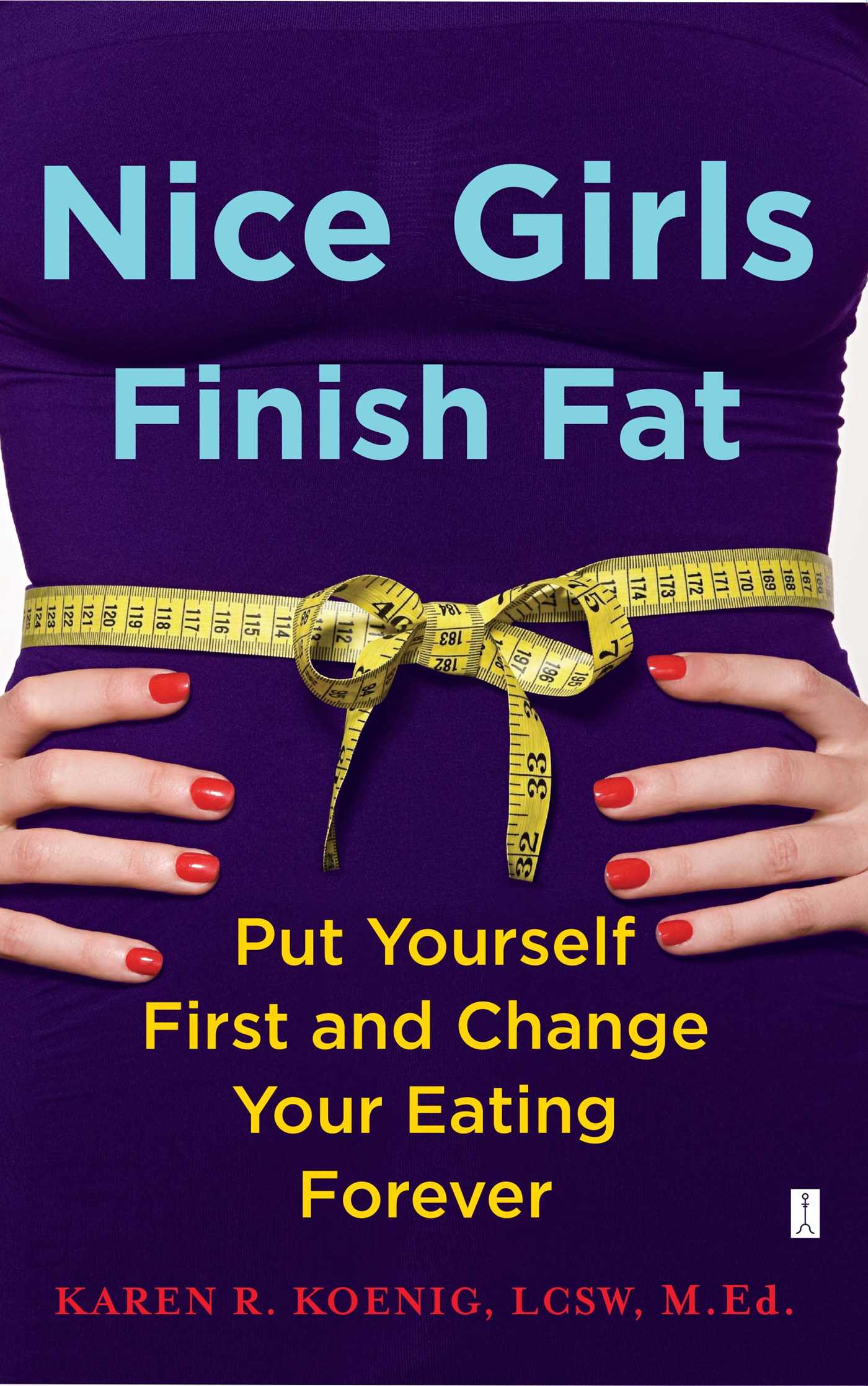
Now, before readers who think I'm maligning either "nice" or "fat" start to pen me hate mail, let me clear up a few things. There is nothing inherently wrong with being either fat or nice. My goal here isn't character assessment and it certainly isn't character assassination. Au contraire, I've spent the last thirty years trying to help nice, overweight women stop obsessing about food, get healthy, love their bodies whatever they weigh, and move on with life. My point is that there just might be a correlation between being nice and getting (and staying) fat. The possibility and nature of that link are what this book is about.
Naturally, not every nice woman has eating or weight issues...and every fat female isn't sweet as honey. And, yes, there are nice men who are fat, thin, and in between, along with portly gents who are dear dumplings and others who are boorish brutes. Frankly, from the limited number of overweight men I've counseled (they don't come to therapy in droves, mind you), I'd say the too-nice label fits them like an extralarge glove. In fact, they're as doggone pleasant and other-centered as the women I treat, so the correlation between chubby and caring might not be a boy-girl thing after all.
However, for the purpose of this book, gender is what it's all about -- the way women are brought up and expected to be nice and how that thrust of socialization straitjackets them in their options, cookie-cutters their personalities, and catapults them headfirst into the Häagen-Dazs. In this culture, even in this day and age, there is a humongous difference between how women and men are raised and treated (never mind the scientific variance of gender genetics), which makes women win the niceness contest hands down.
I know all about it. I was once an overly nice girl turned woman myself -- an overweight one, at that. It's not that I'm no longer affable and kind or that I've given up being giving. I haven't. But I work extra hard at not striving to be nice for nice's sake, as if it's the brass ring or an Olympic medal, the one defining word that sums up my entire existence. I've incorporated a sprinkling of "not nice" into my personality and -- wonder of wonders -- I am still standing. As I've gotten older, I've developed this crazy notion I can be anything I want to be, and that includes a giver and taker, a person who elbows herself up to the front of the line when need be and invites folks to step ahead of her just because I feel like it, a woman who finds pleasing herself one of life's underrated delights, yet who is considered by most people as caring, nurturing, generous, and, yes, downright nice.
This book is for all you women who know you're too nice, who recognize somewhere deep inside that overdoing for others leaves nothing for you, who don't get why you can't stop eating when you're not hungry, who feel the need to apologize for any particle of your being that isn't wholesome and angelic, who take care of others with love and take care of yourself with food, who work too hard on being perfect, live to please others, think no and say yes, and have to make things right for everyone.
Every chapter in this book speaks to niceness that is unhealthy in its extreme and keeps you joined at the hip with food. Think of these pages as guiding you through an annotated tour of Niceville, including the pitfalls of perfectionism, the hazards of food as self-care, the downside of doing everything yourself, the perils of having your needle permanently stuck in the yes groove, the masochism of trying to be all things to all people all the time, and the dangers of letting yourself get so stressed out that you're killing yourself because you can't stop worshipping at the altar of nice. By the time you're done reading, you'll understand how being too good and giving at your own expense encourages you to camp out in front of your refrigerator and skyrockets your risk of remaining overweight, unhealthy, and underhappy.
Along the way, you'll learn the life skills and self-care strategies needed to create a happy, fulfilling, successful life and stop abusing food. Life skills are general abilities for negotiating the world effectively, your basic tools for maximizing your potential. Self-care strategies are exactly what they sound like, the behaviors and activities you must engage in to keep yourself in good shape -- physically, mentally, and emotionally. Skills and strategies are all learnable with drive, practice, and patience. No matter how young or old you are, you can learn to make choices that are always in your best interest.
Chapters include a host of activities and advice to help you pack your bag and make tracks out of Niceville:
Grab Your Thinking Cap exercises focus your attention on the psychological, interpersonal, and social aspects of your life you need to understand in order to make meaningful change.
Nice Girl Recovery Tips give you a heads-up on how to undo years of overly nice behavior and transform dysfunctional beliefs and behaviors.
No More Nice Girl Manifestos are practical dos and don'ts for every wannabe former nice girl.
Meet One of the Nice Girls vignettes tell the stories of aspiring saints like you who are learning to toss away their halos and stop abusing food and their bodies.
Think of it: You'll soon be the envy of all your Goody Two-shoes friends -- basking in the warmth of people who can't do enough for you, leaving work on the dot of five heading for a well-deserved workout, and dancing the night away instead of taking care of your sister's kids while she's out on the town. By the end of this book, you'll have the wisdom and tools to give yourself a surgically safe nice-ectomy, put food in its rightful place, and get on with creating the life you've always wanted and deserve.
Copyright © 2009 by Karen R. Koenig