
Plus, receive recommendations and exclusive offers on all of your favorite books and authors from Simon & Schuster.
0:00 /
Table of Contents
About The Book
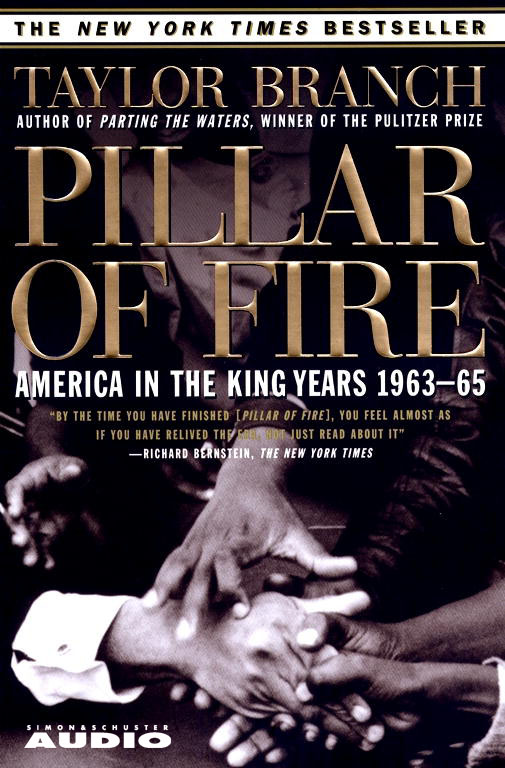
From Pulitzer Prize-winning author Taylor Branch, the second part of his epic trilogy on Martin Luther King, Jr. and the American Civil Rights Movement.
In the second volume of his three-part history, a monumental trilogy that began with Parting the Waters, winner of the Pulitzer Prize and the National Book Critics Circle Award, Taylor Branch portrays the Civil Rights Movement at its zenith, recounting the climactic struggles as they commanded the national stage.
Beginning with the Nation of Islam and conflict over racial separatism, Pillar of Fire takes the reader to Mississippi and Alabama: Birmingham, the murder of Medgar Evers, the "March on Washington," the Civil Rights Act, and voter registration drives. In 1964, King is awarded the Nobel Peace Prize.
Branch's magnificent trilogy makes clear why the Civil Rights Movement, and indeed King's leadership, are among the nation's enduring achievements. In bringing these decades alive, preserving the integrity of those who marched and died, Branch gives us a crucial part of our history and heritage.
In the second volume of his three-part history, a monumental trilogy that began with Parting the Waters, winner of the Pulitzer Prize and the National Book Critics Circle Award, Taylor Branch portrays the Civil Rights Movement at its zenith, recounting the climactic struggles as they commanded the national stage.
Beginning with the Nation of Islam and conflict over racial separatism, Pillar of Fire takes the reader to Mississippi and Alabama: Birmingham, the murder of Medgar Evers, the "March on Washington," the Civil Rights Act, and voter registration drives. In 1964, King is awarded the Nobel Peace Prize.
Branch's magnificent trilogy makes clear why the Civil Rights Movement, and indeed King's leadership, are among the nation's enduring achievements. In bringing these decades alive, preserving the integrity of those who marched and died, Branch gives us a crucial part of our history and heritage.
About The Author
Photo Credit: J.Brough Schamp
Taylor Branch is the bestselling author of Parting the Waters: America in the King Years, 1954-63; Pillar of Fire: America in the King Years, 1963-65; At Canaan’s Edge: America in the King Years, 1965-1968; and The Clinton Tapes. He has won the Pulitzer Prize and the National Book Critics Circle Award.
About The Readers
Product Details
- Publisher: Simon & Schuster Audio (February 1, 1998)
- Runtime: 7 hours
- ISBN13: 9780743548151
Browse Related Books
Resources and Downloads
High Resolution Images
- Book Cover Image (jpg): Pillar of Fire Abridged Audio Download 9780743548151(0.1 MB)
- Author Photo (jpg): Taylor Branch Photo Credit: J.Brough Schamp(4.5 MB)
Any use of an author photo must include its respective photo credit