

Plus, receive recommendations and exclusive offers on all of your favorite books and authors from Simon & Schuster.
Table of Contents
About The Book
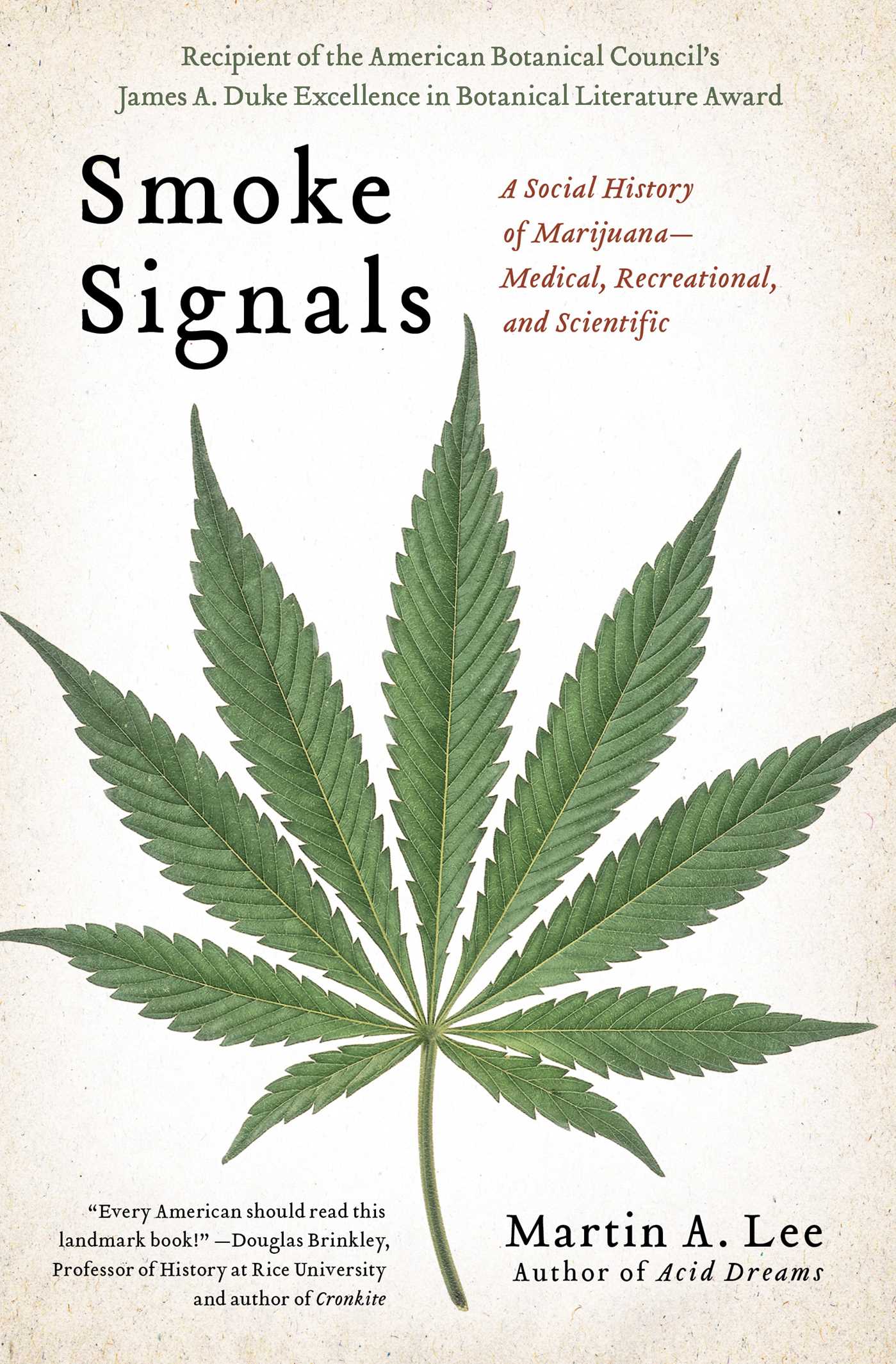
A bestselling author of Acid Dreams tells the great American pot story— a panoramic, character-driven saga that examines the medical, recreational, scientific, and economic dimensions of the world’s most controversial plant.
Martin A. Lee traces the dramatic social history of marijuana from its origins to its emergence in the 1960s as a defining force in a culture war that has never ceased. Lee describes how the illicit marijuana subculture overcame government opposition and morphed into a dynamic, multibillion-dollar industry.
In 1996, California voters approved Proposition 215, legalizing marijuana for medicinal purposes. Similar laws have followed in more than a dozen other states, but not without antagonistic responses from federal, state, and local law enforcement. Lee, an award-winning investigative journalist, draws attention to underreported scientific breakthroughs that are reshaping the therapeutic landscape. By mining the plant’s rich pharmacopoeia, medical researchers have developed promising treatments for cancer, heart disease, Alzheimer’s, diabetes, chronic pain, and many other conditions that are beyond the reach of conventional cures.
Colorful, illuminating, and at times irreverent, this is a fascinating read for recreational users and patients, students and doctors, musicians and accountants, Baby Boomers and their kids, and anyone who has ever wondered about the secret life of this ubiquitous herb.
Martin A. Lee traces the dramatic social history of marijuana from its origins to its emergence in the 1960s as a defining force in a culture war that has never ceased. Lee describes how the illicit marijuana subculture overcame government opposition and morphed into a dynamic, multibillion-dollar industry.
In 1996, California voters approved Proposition 215, legalizing marijuana for medicinal purposes. Similar laws have followed in more than a dozen other states, but not without antagonistic responses from federal, state, and local law enforcement. Lee, an award-winning investigative journalist, draws attention to underreported scientific breakthroughs that are reshaping the therapeutic landscape. By mining the plant’s rich pharmacopoeia, medical researchers have developed promising treatments for cancer, heart disease, Alzheimer’s, diabetes, chronic pain, and many other conditions that are beyond the reach of conventional cures.
Colorful, illuminating, and at times irreverent, this is a fascinating read for recreational users and patients, students and doctors, musicians and accountants, Baby Boomers and their kids, and anyone who has ever wondered about the secret life of this ubiquitous herb.
About The Author
Photograph by Quincey Imhoff
Martin A. Lee is the author of four books, including most recently Smoke Signals: A Social History of Marijuana – Medical, Recreational and Scientific. He is the cofounder of the media watch group FAIR and the director of Project CBD, a medical science information service. He is also the author of Acid Dreams and The Beast Reawakens, and his writing has appeared in many publications, including The Washington Post, The Los Angeles Times, Harper’s Magazine, Le Monde Diplomatique, Rolling Stone, The Nation, Salon.com, HuffingtonPost.com, and TheDailyBeast.com.
Product Details
- Publisher: Scribner (August 14, 2012)
- Length: 528 pages
- ISBN13: 9781439127933
Browse Related Books
Raves and Reviews
“Smoke Signals is an important, serious-minded look at the role cannabis has played in American history. He tackles the hard issues of marijuana prohibition with keen insight and righteous indignation. I agree with Lee’s central premise that our marijuana laws are draconian. Every American should read this landmark book!”
– Douglas Brinkley, Professor of History at Rice University and author of Cronkite
"A ripping read, thoroughly researched, Smoke Signals will help inform the current debate and hopefully hasten the demise of prohibition." —David Bronner, CEO, Dr. Bronner's Magic Soaps
"[A] well-reasoned, entertainingly written, and passionate examination of the social and culture war that surrounds the drug."—Booklist
"In this accessible and well-researched analysis, Lee offers a cultural reckoning of cannabis in its many incarnations, spanning from its first recorded utilization in 2700 B.C.E. to the present...a compelling read and an excellent source of information on the topic."—Publishers Weekly
"Smoking a doobie isn’t the worst thing a person could do...and Lee backs that thought up with social history aplenty, ranging from neolithic experiments down to the Kerouac-ian consumers of the Beat Era."—Kirkus Reviews
"Lee…imagines a bright, legal, lucrative future for weed.”—Business Week
“[E]xuberant, richly researched.”
– Boston Globe
"High but not dry...a lively and informative book.”
– Detroit Metro Times
“This is a brilliant book . . . Smoke Signals is destined to be a classic.”
– Mikki Norris, West Coast Leaf
“As Martin A. Lee shows in Smoke Signals, his engaging and illuminating new history, marijuana’s contraband status is a result of historical accident, racial prejudice, xenophobia, loads of cultural baggage, and an astonishing amount of ignorance.”
– Jacob Sullum, Reason
“Lee’s new book is the precise educational tool that our country currently needs . . . Smoke Signals should be required reading in every high school history class.”
– David J. Brown, author, Mavericks of Medicine
“[A] clearheaded survey that stretches from 2700 B.C. to the Obama administration.”
– James Hughes, Slate
“[A] delightful surprise . . . impossible to put down.”
– Anna Diaz, Real Weedist
"[T]he best, most comprehensive account of the American marijuana movement(s) to date . . . Smoke Signals is a must read for anyone who wants to understand the contemporary marijuana movement."
– Phil Smith, Drug War Chronicle
“Hallelujah and glory be to Smoke Signals, Martin Lee’s bodacious new book…[Lee] chronicles everything and everyone worth chronicling in the annals of marijuana.”
– High Times
Resources and Downloads
High Resolution Images
- Book Cover Image (jpg): Smoke Signals eBook 9781439127933
- Author Photo (jpg): Martin A. Lee Photograph by Quincey Imhoff(0.1 MB)
Any use of an author photo must include its respective photo credit





